7 Conversion Rate Optimization (CRO) Tactics That Drive Real Results
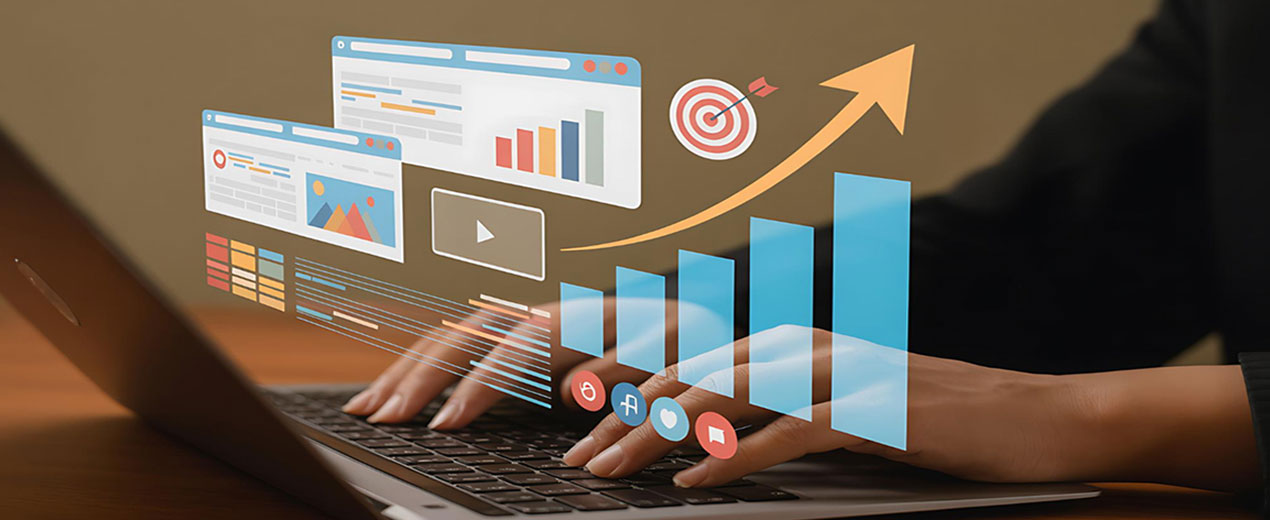
In the world of digital marketing, where businesses relentlessly compete for attention, clicks, and sales, gaining visibility is no longer enough. What matters most is turning those visitors into paying customers — and that’s where Conversion Rate becomes a critical metric of success. Increasing traffic without improving conversions is like filling a funnel with holes: the water (your prospects) will escape before reaching the bottom (your conversions).
But here’s the truth: just generating leads isn’t enough — what truly drives business growth is converting those leads into loyal customers. This is the promise of Conversion Rate Optimization — a methodical, data-driven approach to refining your sales funnel so it performs better at every step.
In this article, we’ll explore 7 high-impact CRO tactics that deliver measurable results. These approaches have been tested in real business environments and have proven to increase conversion performance across industries and business sizes.
1. Deep Audience Insights: Know Your Users Better Than They Know Themselves
Before you begin optimizing anything, you must deeply understand who you’re optimizing for. Many businesses make the mistake of assuming they know their audience, when in reality the insights are surface-level and incomplete.
Why Audience Research Is a Conversion Multiplier
Your messaging, offers, UX design, and funnel structure should all be shaped by data — not assumptions. When you truly understand your users’ goals, pain points, motivations, and objections, your entire customer journey becomes more targeted, persuasive, and effective.
Essential Elements of User Research
- Demographics & Psychographics: Age, location, income, interests, values.
- Behavioral Data: What pages they visit, time on page, bounce patterns.
- Intent Signals: Which content they engage with before purchasing.
- Feedback & Voice of Customer: Surveys, live chat transcripts, reviews.
Tools for User Insight
- Heatmaps (Hotjar, Crazy Egg)
- Session recordings
- Surveys & polls
- Customer interviews
By mapping user intent and aligning your funnel with real expectations, you reduce friction and motivate action. This foundational step dramatically improves the effectiveness of all subsequent CRO tactics.
2. Craft Persuasive Value Propositions That Convert
Your value proposition answers one fundamental question: Why should someone choose your product or service right now? Without a compelling answer, visitors will drift away without taking action.
What Makes a Value Proposition Effective?
A strong value proposition:
- Clearly states the benefit the user will get.
- Communicates differentiation vs. competitors.
- Reduces anxiety by addressing objections before they arise.
Examples of High-Impact Messaging
Before (weak): “We provide top-quality software solutions.”
After (strong): “Launch faster and reduce errors with the only AI-powered platform built for marketers.”
- Before (weak): “We provide top-quality software solutions.”
- After (strong): “Launch faster and reduce errors with the only AI-powered platform built for marketers.”
See how the second version focuses on tangible benefit, differentiates the product, and gives users a reason to care?
Testing Your Copy
Once you create messaging, validate it:
- A/B test headlines and subheadlines
- Test value statements on landing pages
- Compare conversion metrics to see what resonates
Strong copy doesn’t just inform — it motivates. It’s a subtle art backed by data and psychological triggers like urgency, scarcity, clarity, trust, and social proof.
3. Optimize Your Landing Pages for Clarity & Focus
Landing pages are conversion hotspots. They’re where prospects decide whether to act or abandon ship. Yet many businesses design landing pages that are noisy, confusing, or misaligned with visitor intent.
Key Principles for High-Converting Landing Pages
- Single Call-to-Action (CTA): A landing page should have one primary action. Multiple conflicting CTAs dilute focus and reduce conversion.
- Above-the-Fold Clarity: Your headline, subheadline, and CTA should make the page’s purpose immediately obvious without scrolling.
- Benefit-Driven Copy: Show what users gain. Features explain. Benefits convince.
- Visual Hierarchy: Use size, color, spacing, and contrast to guide attention to your CTA.
- Minimal Distractions: Navigation bars, unrelated offers, and clutter hurt conversions.
Landing Page Elements That Boost Conversions
- Hero headline with strong benefit
- Supporting subtext that reinforces value
- Prominent CTA button
- Trust signals (reviews, badges, testimonials)
- A clear visual or explainer video
Getting landing pages right often produces rapid gains in conversions — sometimes as much as 30–50% with minimal redesign effort.
4. Use Data-Driven A/B Testing to Validate Decisions
Guesswork kills conversions. Just because something feels right doesn’t mean it performs well. That’s where A/B testing comes in.
What Is A/B Testing?
A/B testing involves comparing two versions of a page, element, or funnel step to see which performs better. Only one variable changes at a time — the headline, the CTA color, the form length, etc. — so you know what truly impacts performance.
Examples of Testable Elements
- Headlines & subheaders
- CTA text and placement
- Hero images or videos
- Form fields and layout
- Page layout or section order
Best Practices for A/B Testing
- Test only one variable at a time
- Run tests long enough for statistical significance
- Prioritize high-impact pages first
- Use data to guide your next test
Tools like Google Optimize, Optimizely, and VWO make A/B testing manageable even for non-technical teams.
If you’re not systematically validating your assumptions, you’re leaving conversions on the table.
5. Reduce Friction in Your Conversion Path
Friction is anything that makes it harder for visitors to convert. Reducing friction increases completion rates and improves the whole user experience.
Common Sources of Friction
- Long, complicated forms
- Unexpected costs at checkout
- Poor page load speeds
- Non-mobile friendly layouts
- Mandatory account creation before purchase
Each of these creates hesitation.
How to Reduce Friction Without Sacrificing Functionality

- Optimize Forms: Only ask for essential information. Use smart validation and inline hints.
- Show Progress Indicators: On multi-step forms, show where users are and how far they have left.
- Enable Guest Checkout: For e-commerce, forcing account creation kills conversions.
- Improve Load Speed: Slow pages have higher abandonment. Compress images, use a CDN, optimize scripts.
- Mobile-First Design: More than half of web traffic is mobile — optimize accordingly.
Friction doesn’t just reduce conversions — it increases anxiety and skepticism. The smoother the path from click to conversion, the more likely users are to complete your desired action.
6. Social Proof: Leverage Trust to Increase Conversions
Humans are social creatures. We tend to trust what others like us have already validated. This psychological trigger is incredibly powerful in conversion funnels.
Types of Social Proof That Work
- Testimonials: Real user quotes that speak to specific benefits
- Case Studies: Longer form proof with data and outcomes
- Ratings & Reviews: Star ratings and review counts increase credibility
- Customer Logos: Seeing trusted brand logos builds instant trust
- User-Generated Content: Photos or reviews from real customers
Where to Use Social Proof
- Above the fold on landing pages
- Near CTAs
- Checkout pages to reduce anxiety
- Pricing pages to justify value
Why Social Proof Works
It reduces uncertainty. It signals real human satisfaction. It answers unspoken objections like:
- “Is this real?”
- “Has this worked for others like me?”
- “Will I regret buying this?”
When implemented strategically, social proof is one of the fastest levers you can pull to increase conversion confidence and results.
7. Improve Post-Click Experience Through Personalization
Your conversion funnel doesn’t end when someone clicks your ad, email, or CTA. In fact, the post-click experience is where many businesses lose prospects. Generic pages perform worse than pages personalized to user intent, traffic source, or behavior.
Personalization That Drives Conversions
- Traffic Source Personalization:
If someone clicked from an email campaign about feature X, show them a landing page emphasizing feature X.
- Dynamic Content:
Display different headlines, visuals, or offers based on visitor segment.
- Behavioral Personalization:
Use past visit data — show new visitors a different experience than returning visitors.
- Geo-Personalization:
Display content based on location (e.g., city-specific messaging or pricing in local currency).
Tools That Enable Personalization
- CRM-based dynamic landing pages
- Personalization engines (e.g., Salesforce, HubSpot)
- Behavioral pop-ups and in-page personalization tools
Personalization Dos & Don’ts
- Do segment by meaningful user behavior
- Don’t over-personalize to the point of creepiness
- Use personalization to streamline conversion, not confuse
The goal isn’t just relevance — it’s to make each visitor feel understood and catered to. A personalized experience dramatically increases both engagement and conversion rates.
Conclusion: A Systematic, Data-Driven Path to Higher Conversions
Increasing conversions is not about a single hack, trick, or shiny new tool. It’s about building a thoughtful, methodical strategy that centers on your audience, clarifies your value, eliminates friction, and repeatedly tests what works.
Here’s a quick recap of the 7 CRO tactics we covered:
- Deep Audience Insights: Know who your users are and what motivates them.
- Persuasive Value Propositions: Communicate a compelling reason to act.
- Optimized Landing Pages: Clear, focused design that drives action.
- A/B Testing: Validate decisions with data, not assumptions.
- Reduced Friction: Streamline every step of the user journey.
- Social Proof: Build trust through real human validation.
- Personalization: Create tailored post-click experiences.
Each tactic on its own can yield results — but when combined in a systematic optimization strategy, they become exponentially more powerful.
Remember: the goal isn’t just more traffic — it’s more relevant, engaged, and converted customers.
Start applying these tactics today, measure consistently, and optimize relentlessly. Over time, you won’t just improve conversions — you’ll unlock sustainable growth, better ROI on every marketing dollar, and stronger customer loyalty.