Best SEO Tools for Competitor Analysis (2026 Complete Guide)
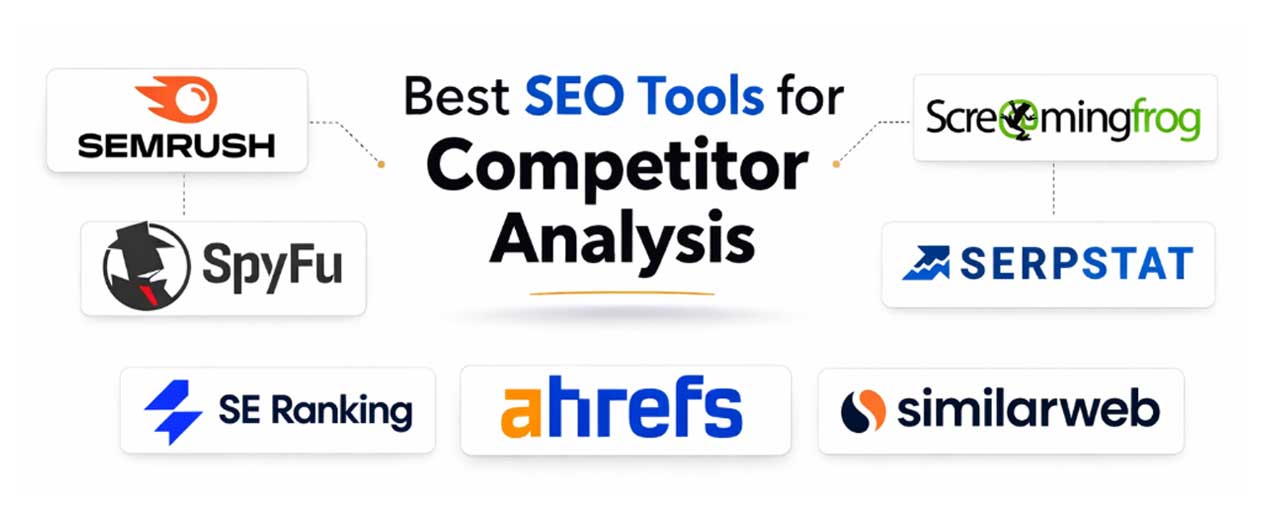
Search Engine Optimization in 2026 has evolved far beyond the traditional checklist of inserting keywords and building backlinks. Modern SEO is driven by intelligence, context, and measurable value. Search engines now evaluate how well a page satisfies user intent, how deeply it covers a topic, how trustworthy the source appears, and how users interact with the content after clicking. Ranking is no longer about isolated tactics — it is about strategic positioning in a competitive ecosystem.
Today, search engines evaluate intent, authority, topical coverage, user satisfaction signals, entity relationships, and brand trust indicators. This means SEO success is no longer achieved by optimizing your own website alone. Instead, high rankings come from understanding the competitive landscape and outperforming others who are already trusted.
Because of this shift, ranking is no longer won by optimizing your own website alone. Instead, you win by understanding why your competitors rank. When you understand what makes current top-ranking pages successful, you gain a roadmap rather than guessing blindly. Modern SEO winners reverse-engineer what works and then build something measurably better.
Competitor analysis is now the foundation of modern SEO strategy.
Instead of guessing what works, smart marketers reverse-engineer success. They treat search results like a data source, not a mystery. By studying ranking pages, backlink profiles, content structures, and topic coverage, they identify patterns that can be replicated and improved upon.
They ask:
- Why is this website ranking above me?
- What keywords bring them traffic?
- Which backlinks made them authoritative?
- Which pages search engines trust the most?
- What content gaps exist that I can dominate?
The right SEO tools allow you to answer these questions with precision. Instead of assumptions, you get measurable insights — keyword data, authority signals, content comparisons, and competitive gaps — that guide decisions with clarity.
In this complete 2026 guide, we will cover the best SEO tools for competitor analysis, how to use them properly, and how to turn raw data into ranking advantages.
Why Competitor Analysis Matters More in 2026
Search engine algorithms now rely heavily on comparative evaluation rather than isolated scoring. Your page is not judged on its own merits alone — it is judged relative to other pages competing for the same query. This comparative model means rankings are determined by who provides the strongest overall answer among available options.
Your page is not judged in isolation. It is judged against:
- Other ranking pages
- Their authority
- Their depth
- Their topical coverage
- Their engagement signals
Meaning:
You don’t need to be perfect — you need to be better than the top 5 results.
Most websites fail at SEO because they create content blindly, without analyzing what already ranks. They publish articles based on ideas rather than competitive intelligence. In contrast, top-ranking websites build content strategically by identifying competitor weaknesses and filling those gaps with better structure, clarity, and depth.
| Insight | What It Tells You |
| Keyword gaps | Traffic you can steal quickly |
| Backlink patterns | Authority-building roadmap |
| Content structure | What Google prefers |
| SERP intent | What users actually want |
| Ranking velocity | Difficulty level |
What Makes a Good Competitor Analysis Tool
Not every SEO tool is useful for competitor research. Many tools show surface-level metrics but fail to connect them into strategic insights. A strong competitor analysis tool must help you understand both why a competitor ranks and how you can realistically compete.
A proper competitor analysis tool must answer 5 questions:
- What keywords bring them traffic?
- Which pages generate maximum traffic?
- Where do their backlinks come from?
- What content topics do they dominate?
- Where are their weaknesses?
The best tools do not just provide raw data tables — they provide filters, comparisons, gap analysis, and prioritization signals. That is what turns data into action.
1. Ahrefs — The Backlink Intelligence King
Ahrefs remains one of the most trusted platforms for reverse-engineering why pages rank. It is especially powerful for backlink and authority analysis, which are still major ranking factors when combined with strong content.
What Ahrefs Does Best
Ahrefs specializes in explaining why search engines trust a website. Its backlink index is extremely large and frequently updated, which makes link analysis more reliable and complete compared to smaller databases.
Key Competitor Features
Site Explorer
- Shows all competitor keywords
- Shows top pages driving traffic
- Reveals ranking history
- Displays traffic value
Content Gap Tool
This feature compares your site with competitors and identifies keywords they rank for that you do not. These represent immediate expansion opportunities and are often the fastest wins.
Link Intersect
This shows websites that link to multiple competitors but not to you. Since those sites already link to similar content, outreach success rates are much higher.
Hidden Insight You Get
Ahrefs helps identify which competitor pages act as authority hubs — the pages that attract the most links and ranking power. These are often better targets for creating superior replacement content than starting from scratch on topics.
Best Use Case
Perfect for:
- Backlink strategy
- Keyword gap analysis
- Authority-building roadmap
2. SEMrush — The Complete Competitive Marketing Suite
SEMrush goes beyond SEO metrics and shows broader digital strategy signals. It connects ranking data with traffic trends, advertising behavior, and visibility features.
Key Competitor Features
Organic Research
Shows:
- Competitor traffic trend
- Top ranking keywords
- Position changes
- SERP features won
Keyword Gap Tool
Allows multi-domain comparisons so you can identify shared and missing keyword opportunities across several competitors at once.
Traffic Analytics
Estimates competitor traffic sources, including search, direct visits, social, and paid channels. This shows whether their growth is SEO-driven or ad-driven.
Unique Advantage
SEMrush helps you understand how competitors grow — not just where they rank. This prevents copying the wrong strategy.
Best Use Case
Perfect for:
- Market research
- Business strategy
- Understanding the competitor growth model
3. SimilarWeb — The Market Intelligence Tool
While most SEO tools focus on rankings, SimilarWeb focuses on business performance and audience behavior. It helps distinguish real competitors from sites that merely rank but do not convert.
Key Insights Provided
- Traffic sources
- User engagement
- Visit duration
- Bounce rate
- Audience interests
- Geographic markets
Why This Matters
Some sites rank but generate weak engagement. Others rank less but convert strongly. Strategy should follow business success, not just rankings.
Best Use Case
Perfect for:
- Identifying true business competitors
- Market positioning
- Niche targeting
4. SpyFu — The Historical Strategy Analyzer
SpyFu focuses on long-term competitive behavior. Instead of showing only current rankings, it reveals historical keyword and advertising patterns.
Key Features
- Historical keyword ranking
- Paid ad history
- Long-term SEO investments
- Competitor campaign strategy
Unique Advantage
You can discover:
- Which keywords competitors consistently target
- Which keywords did they abandoned
- Which keywords convert profitably
This prevents wasting time on non-profitable keywords.
Best Use Case
Perfect for:
- Commercial intent keyword discovery
- Long-term strategy planning
5. SE Ranking — The Cost-Effective Power Tool
SE Ranking offers broad competitor features at a more accessible cost, making it popular among smaller agencies and growing teams.
Key Competitor Analysis Tools
- SERP competitor tracking
- Keyword overlap analysis
- Competitor backlink monitoring
- Page comparison tool
Hidden Strength
The page comparison tool shows:
- Word count differences
- Heading differences
- Keyword usage gaps
This directly explains why competitors outrank you.
Best Use Case
Perfect for:
- Agencies
- Growing businesses
- On-page SEO improvement
6. Serpstat — The Topic Cluster Analyzer
Serpstat focuses on topical authority and semantic coverage — both critical ranking factors in 2026.
It identifies topic clusters that competitors dominate, missing support pages, and semantic keyword opportunities that strengthen topical depth.
Why Important in 2026
- Google evaluates expertise using topical depth.
- You don’t rank with one article anymore.
- You rank with a content ecosystem.
- Serpstat shows exactly which supporting content you lack.
Best Use Case
Perfect for:
- Blog strategy
- Topical authority building
7. Screaming Frog + Google Tools — The Technical Intelligence Stack
External tools show competitor signals. Technical crawlers reveal structural advantages and weaknesses.
Screaming Frog
Crawls competitor sites to analyze:
- URL structure
- Internal linking
- Page depth
- Indexation patterns
Google Search + SERP Analysis
Manual SERP analysis still matters.
You should study:
- Featured snippets
- People Also Ask
- Entities Google recognizes
- Content format preference
This reveals Google’s intent expectations.
Step-by-Step Competitor Analysis Workflow (2026 Method)
Step 1 — Identify Real Competitors
Use SimilarWeb and manual SERP observation to find websites targeting the same audience rather than the biggest brands. Competing with realistic targets produces faster results.
Step 2 — Find Keyword Opportunities
Use Ahrefs or SEMrush to locate keywords where competitors rank between positions 4-15. These require minimal effort to overtake.
Step 3 — Analyze Top Pages
Study structure, depth, and intent coverage. Create a page that answers the query more clearly, not just more lengthily.
Step 4 — Reverse Engineer Backlinks
Target sites are already linking to similar content since they are most likely to link to improved resources.
Step 5 — Build Topic Clusters
Create supporting content around main topics to demonstrate expertise.
Step 6 — Optimize Technical Structure
Ensure your site is easier to crawl and understand than your competitors.
Common Mistakes Businesses Make
Many businesses copy competitor pages instead of improving them. Google prefers differentiation and added value. Others target highly competitive keywords first, delaying results unnecessarily.
Smart SEO begins with achievable opportunities. Some ignore search intent, optimizing for keywords rather than user goals, while others chase backlinks without relevance. Each mistake wastes time because the strategy was never guided by competitive insight.
Advanced 2026 Strategies (Very Important)
Entity SEO is now critical. Google understands topics through relationships, not just words. Pages must cover related concepts naturally. Programmatic gap-filling allows smaller sites to dominate overlooked long-tail queries quickly.
The topical authority strategy focuses on connected expertise rather than random publishing frequency. Brand signal optimization leverages searches and mentions to build trust beyond backlinks.
These strategies separate average SEO from dominant SEO.
Quick Tool Comparison
| Tool | Best For | Strength |
| Ahrefs | Backlinks | Authority insights |
| SEMrush | Strategy | Traffic intelligence |
| SimilarWeb | Market | Business competition |
| SpyFu | History | Profit keywords |
| SE Ranking | Affordable | Page comparison |
| Serpstat | Topics | Authority building |
| Screaming Frog | Technical | Site structure |
Final Thoughts
SEO in 2026 is no longer about optimizing pages in isolation. It is about understanding competition with precision and acting strategically. The sites that win are not always the largest — they are the most informed and methodical.
Competitor analysis transforms SEO from guessing into engineering. It replaces assumptions with evidence and replaces random effort with targeted execution.
Instead of asking “How do I rank?”, the smarter question is “Why are they ranking — and where are they weak?”
That shift turns SEO into a system you can control and scale.
Neel Networks Tip:
The fastest SEO growth does not come from doing more work — it comes from doing the right work first. Competitor analysis tells you exactly what that work is.