UI vs UX: What’s the Difference & Why It Impacts Your Website Revenue in 2026

In the digital economy of 2026, a “pretty” website is no longer a luxury — it’s the bare minimum. But as many business owners are discovering, a beautiful site that doesn’t convert is just an expensive digital business card. Design alone does not generate revenue. Performance does.
The line between User Interface (UI) and User Experience (UX) has never been thinner, yet the difference between them is exactly where your revenue lives or dies. While UI catches the eye, UX captures the wallet. If users don’t trust what they see, they hesitate. If they struggle while navigating, they leave. In both cases, your business loses money.
Understanding the UI vs UX revenue impact in 2026 is no longer optional. It directly affects your conversion rates, customer retention, and overall growth. When UI builds trust, and UX removes friction, your website becomes a revenue engine instead of just a digital presence.
In this guide, you’ll learn the clear difference between UI and UX in simple terms. We’ll explain how each impacts conversions, how reducing friction increases sales, why user experience delivers strong ROI, and which 2026 design trends you cannot ignore. By the end, you’ll understand whether your website is helping your business grow — or silently holding it back.
Understanding the Core: UI vs. UX in 2026
In 2026, your website is not just a marketing asset — it is your primary sales engine. Businesses that understand the UI vs UX revenue impact in 2026 are generating higher conversions without increasing ad spend. The reason is simple: design directly influences behavior. When users feel confident and comfortable on your website, they are more likely to take action. That action turns into measurable revenue.
Before we talk about conversions and ROI, we must clearly understand what UI and UX actually mean. Many business owners still confuse the two, which leads to poor investment decisions. UI and UX are connected, but they solve different problems. One focuses on visual communication, while the other focuses on functional performance. Both are essential for sustainable growth.
What is the Difference Between UI and UX Design?
User Interface (UI) refers to the visual elements users interact with on your website. It includes everything from button styles and typography to colors, spacing, icons, and layout structure. UI is responsible for creating the first impression and visually guiding users toward key actions. In simple terms, UI is what your visitors see.
User Experience (UX), on the other hand, focuses on how your website works and how users feel while navigating it. It includes navigation flow, page speed, checkout process, mobile responsiveness, and usability structure. UX ensures that users can complete their goals easily without confusion or frustration. It is the strategic journey behind the scenes.
Here is a simple comparison to clarify:
| Aspect | UI (User Interface) | UX (User Experience) |
| Focus | Visual design & interaction | Usability & functionality |
| Goal | Make it attractive & engaging | Make it simple & frictionless |
| Revenue Role | Builds trust quickly | Increases conversions & retention |
| Example | Button color & layout | Checkout flow & page speed |
A website with a beautiful design but confusing navigation will struggle to convert. Similarly, a highly functional website with outdated design may fail to build trust. In 2026, businesses that align both see stronger conversion rate optimization results.
User Interface (UI)
Your UI determines how users perceive your brand within the first few seconds. Research shows that users form judgments about credibility almost instantly based on design quality. A clean layout, strong visual hierarchy, and well-designed call-to-action buttons increase engagement and reduce hesitation. In competitive industries, this visual trust factor becomes a major differentiator.
Strong UI improves revenue by influencing user psychology. Clear and high-contrast CTA buttons increase click-through rates. Proper spacing reduces cognitive overload, making content easier to process. Consistent brand colors improve recognition and build familiarity over time. These small improvements create a smoother path toward conversions.
In the context of 2026 design trends, UI is becoming more minimal, mobile-focused, and adaptive. Dark mode compatibility, bold typography, and micro-interactions are increasingly common. Businesses that ignore modern UI standards risk appearing outdated, which negatively impacts trust and ultimately reduces revenue potential.
User Experience (UX)
UX determines whether users stay on your website or leave within seconds. In 2026, attention spans are shorter, and expectations are higher than ever. Users expect websites to load instantly, navigation to be intuitive, and checkout processes to be effortless. If they encounter friction at any stage, they simply move to a competitor.
Effective UX focuses on eliminating obstacles in the user journey. This includes simplifying navigation menus, reducing unnecessary form fields, optimizing page speed, and ensuring seamless mobile performance. Each improvement reduces friction and increases the probability of conversion. That is the foundation of strong user experience ROI.
Here are common UX factors that directly influence revenue:
- Fast page loading (under 2 seconds)
- Clear and logical navigation
- Simple checkout process
- Mobile-friendly layout
- Transparent pricing
When UX is optimized, bounce rates decrease, and session duration increases. More importantly, completed transactions rise. This is where the true UI vs UX revenue impactin 2026 becomes measurable — not in theory, but in actual sales performance.
UI builds immediate trust through design and visual clarity. UX builds long-term value through functionality and ease of use. UI attracts attention, while UX ensures action. When both work together strategically, they create a powerful system for conversion rate optimization and sustainable business growth in 2026.
The Revenue Connection: Why Design Impacts Your Bottom Line

In 2026, design is no longer just about aesthetics — it is directly tied to profitability. Businesses that optimize both UI and UX are seeing measurable growth in conversions, average order value, and customer retention. The UI vs UX revenue impact 2026 is not theoretical; it shows up clearly in analytics dashboards. When your website removes friction and builds trust simultaneously, revenue increases without requiring additional traffic.
Many companies focus heavily on paid ads and SEO but ignore on-site experience. This creates a costly problem: traffic increases, but conversions remain low. Without strong conversion rate optimization, you are essentially pouring water into a leaking bucket. UI and UX fix those leaks by improving how users interact, decide, and complete actions.
How UI/UX Design Boosts Website Conversion Rates by up to 400%
Conversion rate is the percentage of visitors who complete a desired action, such as making a purchase or filling out a form. Even small improvements in UI and UX can dramatically increase this number. When navigation becomes clearer and CTAs are more visible, users are naturally guided toward conversion points. That clarity reduces hesitation and increases confidence.
For example, improving button placement, reducing clutter, and simplifying forms can significantly increase engagement. A cleaner layout keeps users focused on one primary action instead of overwhelming them with choices. When users don’t have to think too much, they act faster.
Key UI/UX improvements that boost conversions:
- Clear and high-contrast call-to-action buttons
- Shorter and simpler forms
- Sticky navigation for easy access
- Social proof near buying decisions
- Faster page loading speed
If your website currently converts at 1% and you improve it to 2%, you have doubled revenue without increasing traffic. That is the real power of strategic design and why conversion rate optimization is essential for growth in 2026.
Reducing “Friction”: The Secret to Lowering Cart Abandonment
Cart abandonment remains one of the biggest revenue leaks in e-commerce. In most industries, nearly 70% of users add items to their cart but never complete the purchase. The main reason is friction — small obstacles that create doubt or inconvenience during checkout.
Common friction points include unexpected shipping charges, forced account creation, complicated forms, and slow payment processing. Each additional step in the checkout journey increases the risk of drop-off. Users today expect instant and seamless transactions.
To reduce friction and increase revenue, focus on:
- Enabling guest checkout
- Displaying the total cost early in the process
- Using auto-fill and smart forms
- Offering multiple payment options
- Showing progress indicators during checkout
When friction is removed, the buying process feels effortless. An effortless experience leads to more completed purchases. This is a direct example of how the UI vs UX revenue impact 2026 influences real business results.
The ROI of UX: Why $1 Invested Returns $100 in Revenue
Investing in UX is one of the highest-return decisions a business can make. Studies consistently show that every dollar spent on UX improvements can generate significantly higher returns over time. The reason is simple: better experiences increase customer satisfaction, repeat purchases, and brand loyalty.
Strong UX reduces support costs because users find answers easily. It increases customer lifetime value because satisfied users return more often. It also improves referrals, as happy customers are more likely to recommend your brand. All of these factors contribute to a strong user experience ROI.
Here’s how UX drives long-term revenue:
- Higher retention rates
- Increased repeat purchases
- Reduced customer complaints
- Better brand perception
- Improved SEO performance through lower bounce rates
Unlike paid advertising, which stops generating results once spending ends, UX improvements continue delivering returns for years. That makes UX not just a design enhancement, but a long-term revenue strategy.
UI attracts attention and builds trust. UX removes friction and makes conversion easy. Together, they directly influence sales performance, cart completion rates, and customer lifetime value. Businesses that ignore design optimization often struggle with stagnant growth despite heavy marketing investment.
Understanding the UI vs UX revenue impact 2026 means recognizing that revenue growth is not just about more traffic — it’s about a better experience. When experience improves, conversions rise naturally.
2026 SEO & Design Trends You Can’t Ignore
As we move deeper into 2026, website design is evolving faster than ever. Search engines are smarter, users are more impatient, and competition is more aggressive. Businesses that adapt to modern experience standards are seeing stronger rankings, better engagement, and higher conversions. The UI vs UX revenue impact 2026 is becoming even more visible because design trends are now directly tied to SEO performance and revenue growth.
Modern design is no longer just about looking good. It must be intelligent, fast, personalized, and inclusive. Google increasingly rewards websites that prioritize user satisfaction, while users reward brands that make their journey effortless. Ignoring these changes means losing both visibility and revenue.
AI-Powered Hyper-Personalization: The New Standard for Retention
In 2026, generic websites feel outdated. Users expect experiences tailored to their behavior, preferences, and past interactions. AI-driven personalization allows websites to adjust content and product recommendations dynamically, and offers based on user data. This makes every visit feel relevant and intentional.
For example, returning users can see personalized product suggestions, while new visitors may receive introductory offers. AI can also adjust homepage banners based on browsing history or location. This level of customization increases engagement and builds stronger emotional connections.
AI-powered personalization improves revenue by:
- Increasing average order value
- Boosting repeat visits
- Improving click-through rates
- Reducing bounce rates
When users feel understood, they are more likely to convert. This is where modern conversion rate optimization blends with advanced UX strategy to drive higher performance.
Mobile-First is Now Mobile-Dominant
Mobile traffic now dominates most industries. In many cases, more than 70% of users visit websites from smartphones. However, many businesses still design primarily for desktop and then “adjust” for mobile. In 2026, that approach is no longer sustainable.
Mobile UX must be the starting point, not an afterthought. Users navigate with their thumbs, expect fast loading speeds, and abandon websites that require zooming or excessive scrolling. Poor mobile experience leads directly to lost revenue.
Critical mobile optimization strategies include:
- Large, thumb-friendly buttons
- Minimal text blocks
- Fast-loading images
- Simplified navigation menus
- Sticky CTAs within easy reach
Google’s ranking algorithms prioritize mobile performance, making this both an SEO and revenue factor. A strong mobile UX improves engagement metrics, which strengthens organic visibility and supports long-term user experience ROI.
Accessibility (WCAG 3.0): Reaching the Inclusive Market
Accessibility is no longer optional — it is a competitive advantage. Websites that follow updated accessibility standards ensure usability for individuals with visual, auditory, or motor impairments. Inclusive design expands your audience and strengthens brand credibility.
Beyond compliance, accessible design improves overall usability for everyone. Clear contrast ratios, readable fonts, and keyboard navigation create smoother experiences. Search engines also favor accessible websites because they provide structured and meaningful content.
Key accessibility improvements include:
- Proper color contrast for readability
- Descriptive alt text for images
- Keyboard-friendly navigation
- Clear heading structures
- Scalable text without breaking layout
Accessible design increases market reach and reduces legal risk. More importantly, it builds trust with a broader audience. In the context of 2026 design trends, accessibility is both an ethical responsibility and a revenue opportunity.
The design landscape in 2026 is shaped by AI personalization, mobile dominance, and inclusive accessibility standards. Businesses that adapt to these trends experience higher engagement, stronger SEO performance, and improved conversion rates. Those who ignore them risk declining visibility and stagnant growth.
Understanding these trends strengthens your overall strategy and reinforces the broader UI vs UX revenue impact 2026. Modern design is not about decoration — it is about intelligent systems that guide users smoothly toward action.
Strategy & Implementation

Understanding theory is important, but revenue growth happens during execution. In 2026, businesses that win are not the ones with the most attractive websites — they are the ones that continuously test, optimize, and improve their experience based on real user behavior. The UI vs UX revenue impact in 2026 becomes visible only when the strategy is backed by data and consistent improvements.
Many companies redesign their website once and assume the job is done. That mindset leads to stagnation. User expectations evolve, competitors improve, and algorithms change. To maintain a strong conversion rate optimization, your design must evolve continuously.
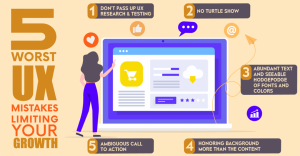
5 Common UX Mistakes That Are Killing Your Conversions Right Now
Even small UX mistakes can quietly damage your revenue. The problem is that many of these issues feel minor internally but create major friction for users. When friction increases, conversions decrease.
Here are five common mistakes that directly impact revenue:
- Cluttered layout: Too many elements compete for attention, overwhelming users and reducing focus on key actions.
- Weak or unclear CTA buttons: Generic text like “Submit” fails to communicate value or urgency.
- Slow page speed: Even a one-second delay can significantly reduce conversions.
- Complicated navigation: If users cannot find what they need quickly, they leave.
- Lack of trust signals: Missing reviews, testimonials, or security badges reduces credibility.
Fixing these issues often produces immediate improvements. For example, simplifying a homepage and highlighting one primary action can significantly improve engagement. Small structural changes frequently generate higher returns than major visual redesigns.
Data-Driven Design: Using Heatmaps and AI to Predict User Intent
In 2026, design decisions should never rely on assumptions. Data-driven design allows businesses to understand exactly how users behave on their website. Instead of guessing what works, you analyze real interactions and optimize accordingly.
Heatmaps, session recordings, and AI-based behavior tracking tools provide insights into where users click, scroll, and drop off. These tools often reveal surprising patterns. You may discover that users ignore your main banner but frequently interact with a secondary section. Or that your pricing table causes confusion due to an unclear structure.
Key tools and methods for data-driven optimization include:
- Heatmaps to track click behavior
- Scroll tracking to measure content engagement
- A/B testing to compare design variations
- Funnel analysis to identify drop-off points
- AI analytics to predict user intent
When combined properly, these tools improve both UI clarity and UX flow. This strengthens overall user experience ROI, as changes are based on measurable insights rather than subjective opinions.
Turning Strategy into Revenue Growth
To maximize the UI vs UX revenue impact 2026, businesses should follow a structured implementation plan:
- Conduct a full UX audit to identify friction points.
- Prioritize high-impact changes, such as checkout simplification or CTA optimization.
- Test improvements using A/B experiments.
- Monitor performance metrics weekly.
- Continue optimizing based on data insights.
The key is continuous improvement. Optimization is not a one-time task; it is an ongoing process that compounds over time. Small conversion gains made consistently can dramatically increase annual revenue.
Strategy separates average websites from high-performing revenue engines. Identifying UX mistakes, implementing data-driven testing, and continuously refining user journeys are essential steps in 2026. Businesses that treat UI and UX as strategic growth tools rather than design projects achieve stronger long-term results.
By combining structured testing with modern design standards, you fully leverage the power of conversion rate optimization and unlock sustainable growth.
Conclusion: Is Your Website Driving Revenue — or Losing It?
In 2026, businesses can no longer afford to treat website design as just a creative task. It is a revenue strategy. The true UI vs UX revenue impact in 2026 lies in how effectively your website turns visitors into paying customers. If your site looks good but doesn’t convert, you’re losing money. If it functions well but lacks trust-building design, you’re still leaving revenue on the table.
UI builds immediate credibility. UX builds long-term performance. Together, they influence everything from bounce rate and cart abandonment to average order value and customer lifetime value. This is why conversion rate optimization and design strategy must work together — not separately.
At Neel Networks, we understand that modern businesses need more than just attractive websites. They need high-performing digital assets that generate measurable results. Our team focuses on strategic UI design, advanced UX optimization, mobile-first architecture, and data-driven improvements aligned with the latest 2026 design trends.
We don’t just redesign websites.
We engineer revenue-focused digital experiences.
Whether you are struggling with low conversions, high bounce rates, or stagnant growth, the solution often lies in experience optimization. Through structured UX audits, performance tracking, and continuous testing, we help businesses unlock strong user experience ROI and sustainable growth.
Why Choose Neel Networks for UI/UX Optimization?
Neel Networks delivers:
- Strategic UI design aligned with brand psychology
- Conversion-focused UX architecture
- Mobile-first and performance-driven development
- AI-powered personalization strategies
- Data-backed A/B testing and optimization
Our approach ensures your website is not just visually appealing — but engineered to convert.
Frequently Asked Questions (FAQ)
1. Which is more important: UI or UX?
Both are equally important because they serve different purposes. UI attracts attention and builds immediate credibility, while UX ensures users can complete actions easily. A visually impressive website with poor usability will fail to convert. Likewise, a functional website with an outdated design may struggle to build trust. Revenue growth requires both working together.
2. How does UI/UX affect SEO rankings?
Search engines prioritize user satisfaction. Good UX reduces bounce rate, increases dwell time, and improves engagement metrics — all of which influence search rankings. Fast loading speed, mobile optimization, and accessibility also directly impact SEO performance. Strong design, therefore, supports both organic visibility and revenue growth.
3. How often should a website be redesigned?
Major redesigns typically happen every two to three years, but optimization should be continuous. In 2026, trends evolve quickly, especially with AI integration and mobile behavior changes. Instead of waiting years for a full redesign, businesses should focus on ongoing improvements and A/B testing to maintain a strong conversion rate optimization.
4. How can I measure user experience ROI?
You can measure user experience ROI by tracking key performance indicators before and after design improvements. Important metrics include:
- Conversion rate
- Average order value
- Cart abandonment rate
- Bounce rate
- Customer lifetime value
If these metrics improve after UX changes, your investment is delivering measurable returns.
5. What is the first step to improving website revenue in 2026?
The first step is conducting a detailed UX audit. Identify friction points in navigation, mobile usability, page speed, and checkout flow. Prioritize high-impact improvements, test changes using A/B experiments, and monitor performance data regularly. Small, consistent optimizations often produce significant revenue growth over time.
Final Takeaway
The UI vs UX revenue impact in 2026 is not about design trends alone — it is about business performance. A high-performing website combines visual trust with frictionless functionality. When you align aesthetics with usability and support decisions with data, your website becomes a predictable growth engine.
Design is no longer decoration.
It is strategy, psychology, and revenue combined.
Your competitors are already optimizing for performance. They are refining user journeys, simplifying checkout flows, and leveraging personalization to increase revenue. The question is — are you?
If you want your website to become a growth engine in 2026, it’s time to prioritize the right balance between UI and UX.
Neel Networks is ready to help you turn design into revenue