Staying Ahead of SEO: Algorithm Updates, Zero-Click Searches & 2026 Trends
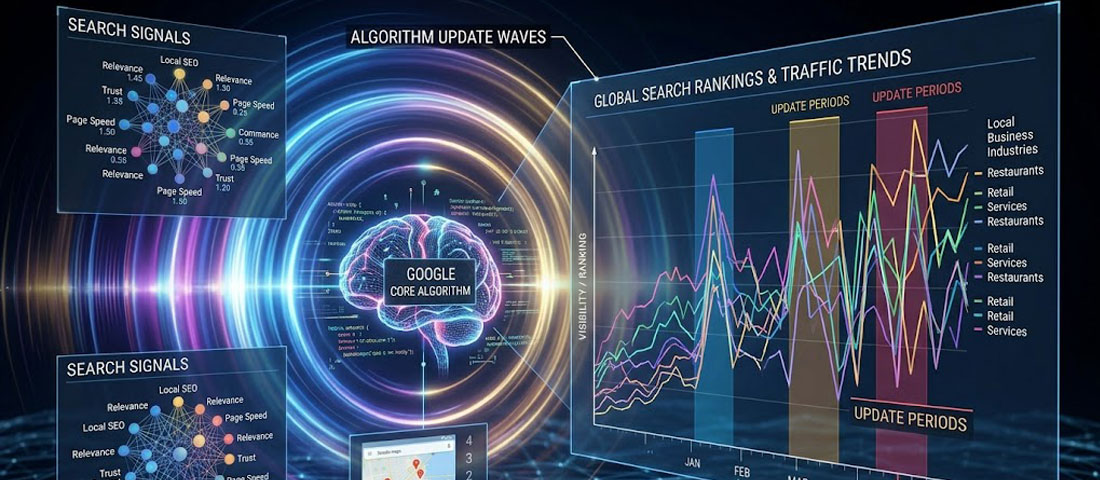
If there is one constant in SEO, it is change. Google makes thousands of algorithm adjustments every year — ranging from minor tweaks that most websites never notice to major core updates that can dramatically shift rankings across entire categories. Businesses that treat SEO as a “set it and forget it” investment find themselves slowly losing ground as the standards evolve. Businesses that stay informed and adapt consistently build durable advantages.
What this guide covers
- 1. How Google Algorithm Updates Work — And Why They Happen
- 2. Major Updates That Have Shaped the Current SEO Landscape
- 3. How to Adapt Your SEO Strategy to Core Algorithm Changes
- 4. Zero-Click Search — What It Is and How to Respond Strategically
- 5. How to Improve CTR in the Era of Zero-Click and AI Overviews
- 6. The SEO Trends That Actually Matter in 2026
- 7. How to Stay Updated With SEO Changes Going Forward
- 8. Frequently Asked Questions About SEO Algorithm Updates and Trends
In 2026, the pace of change in search has accelerated further, driven by AI integration into Google’s core systems. AI Overviews are now showing on a significant proportion of queries, changing how users interact with search results — and changing what “good” SEO performance looks like. Zero-click searches, where users get their answer directly from Google without visiting any website, are reshaping traffic patterns across industries.
This guide covers everything you need to stay ahead: how to understand and adapt to Google algorithm updates, how to improve your CTR in the era of zero-click search, and the SEO trends that are defining what works in 2026.
How Google Algorithm Updates Work — And Why They Happen
Google runs on a complex, multi-layered algorithm that evaluates billions of web pages against thousands of signals to rank results for every query. This algorithm is not static — Google makes an average of 4,000 to 6,000 changes per year to its search system, ranging from minor adjustments to major updates that can shift rankings significantly.
Algorithm updates happen for a consistent set of reasons:
- Improving result quality. Google’s fundamental objective is to surface the most useful, accurate, trustworthy results for every query. When it identifies patterns of lower-quality content ranking above higher-quality alternatives, it adjusts the algorithm to correct this.
- Countering spam and manipulation. Every time SEO practitioners discover a tactic that improves rankings without improving content quality, Google eventually responds with an update that neutralises or penalises it. The history of SEO is largely the history of Google closing the gaps between what ranks and what genuinely deserves to rank.
- Integrating new capabilities. As Google’s AI systems become more sophisticated, they are integrated into the core ranking algorithm — improving Google’s ability to understand natural language, assess content quality, and evaluate user satisfaction.
- Responding to changing user behaviour. Search behaviour evolves — new query types emerge, device usage shifts, and user expectations for search results change. Algorithm updates reflect these shifts.
Types of Algorithm Updates
Core updates are broad changes to Google’s main ranking algorithm. They are announced officially, typically affect a wide range of queries and industries, and can cause significant ranking volatility for several weeks after rollout. Google releases several broad core updates per year.
Spam updates specifically target manipulative SEO practices — link spam, content spam, keyword stuffing, cloaking. These tend to be more targeted than core updates, focusing on specific manipulation patterns.
Helpful Content System updates target content created primarily for search engines rather than for human users — thin, generic, or AI-generated-at-scale content that ranks but does not genuinely help readers.
Product Reviews updates specifically target review-style content, rewarding reviews that demonstrate genuine first-hand expertise and penalising superficial summaries of what is already widely published.
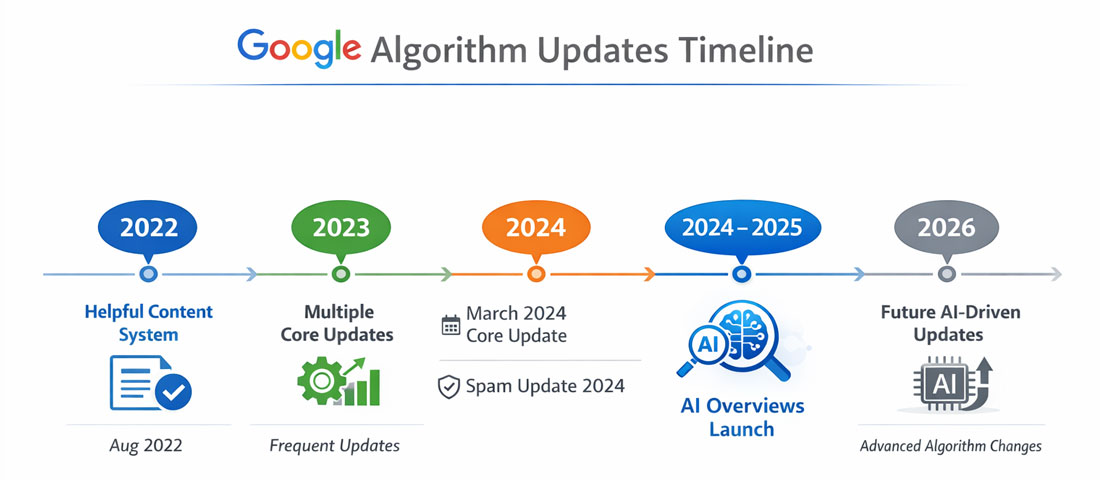
The pace and significance of Google algorithm changes has accelerated through 2023–2026 as AI integration reshapes how search understands and evaluates content.
Major Updates That Have Shaped the Current SEO Landscape
The Helpful Content System (2022–2024, ongoing)
Google’s Helpful Content System was introduced in August 2022 and has been updated multiple times since. It evaluates content at a site-wide level — assessing whether a website’s content was created to genuinely help people or primarily created to attract search traffic. Sites with a significant proportion of “unhelpful” content (thin, generic, or clearly written for search engines rather than users) see their entire domain receive a classifying signal that reduces rankings across all content — not just the unhelpful pages.
The practical implication: every page you publish contributes to or detracts from your site’s overall helpfulness classification. A blog content strategy that floods the site with thin, low-value posts to target keyword opportunities can depress the rankings of the high-quality pages on the same domain.
The March 2024 Core Update
The March 2024 Core Update, which ran for approximately 45 days, was one of the most significant algorithm updates in several years. It explicitly targeted low-quality content at scale — particularly content that used AI generation to produce large volumes of superficially topically relevant but genuinely thin or unhelpful articles. Many sites that had relied heavily on AI-generated content without adequate human editing and enrichment saw dramatic ranking declines.
The update reinforced the signal that Google had been sending with the Helpful Content System: the future of SEO content is genuine expertise, real experience, specific insights, and actual value to readers — not keyword-targeted text production at scale.
AI Overviews Rollout (2024–2026)
The broad rollout of Google AI Overviews — which began in the USA in May 2024 and expanded globally through 2025 — has fundamentally changed the SERP for many queries. AI Overviews appear at the top of results for an estimated 15 to 30% of queries (varying significantly by query type and market), providing synthesised answers before any organic results.
The impact on organic CTR has been measurable but nuanced. Informational queries have seen reduced click-through rates to organic results — users read the AI-generated answer and leave without clicking. Commercial and transactional queries show less impact — users with purchase intent still click through to websites for comparison, evaluation, and transaction.
How to Adapt Your SEO Strategy to Core Algorithm Changes
The right response to algorithm updates is not to scramble for a new “trick” that exploits the new rules. The right response is to understand what the update was rewarding or penalising and ensure your content and site genuinely match what Google is trying to reward.
-
Monitor your Google Search Console data during and after updates
During and in the weeks following a major algorithm update, review your Search Console Performance report for significant changes in impressions, clicks, and average position. Compare the affected pages against the stated focus of the update to understand whether any changes relate to your site specifically — or whether your performance change reflects broader market volatility. -
Audit your content against the Helpful Content guidelines
Regularly review your content library against the questions Google uses to assess helpfulness: Was this written by someone with demonstrated expertise on the topic? Does it provide original insight, information, or value beyond what any other source provides? Would a reader find this genuinely useful, or does it feel like it was written for search engines? Pages that score poorly on these questions should be improved or removed. -
Identify and address site-wide quality issues
If a core update causes broad ranking declines across your site (not just specific pages), the issue may be a site-wide quality signal rather than individual page problems. Audit for: large volumes of thin or outdated content, pages with very high bounce rates and low engagement, duplicate or near-duplicate content, and pages that exist primarily to target keywords rather than serve genuine user needs. -
Strengthen E-E-A-T signals
Core updates consistently reward content that demonstrates genuine Experience, Expertise, Authoritativeness, and Trustworthiness. Strengthen these signals by: adding author bylines with credentials to important content, incorporating first-hand experience and specific case examples, citing credible external sources, building a strong review and reputation profile, and earning citations from authoritative sources in your industry. -
Do not make reactive changes during an update’s rollout period
Algorithm updates often cause significant short-term volatility before settling. Making significant changes to content or site structure during the multi-week rollout period can make it harder to assess what the update actually affected on your site. Monitor, document, and assess — then make strategic changes once the update has fully rolled out and rankings have stabilised.
Zero-Click Search — What It Is and How to Respond Strategically
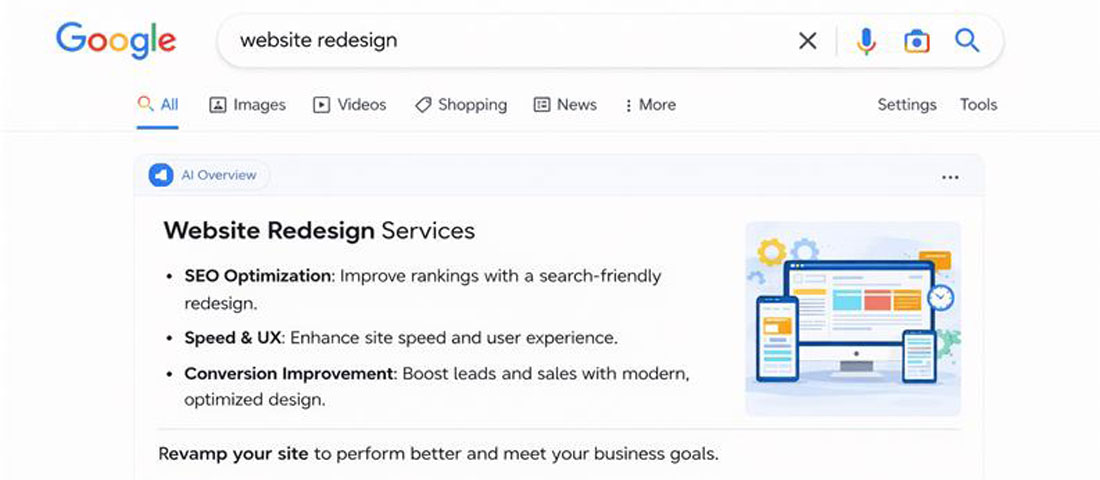
Zero-click searches — where users get their answer directly from Google’s SERP without clicking any result — are reshaping traffic patterns for informational content across all industries.
A zero-click search occurs when a user’s query is answered directly on the Google results page — through an AI Overview, a featured snippet, a knowledge panel, a local pack result, or another SERP feature — without the user needing to click through to any website. The user gets the information they needed; no website receives a visit.
Zero-click searches are not new — featured snippets, knowledge panels, and direct answer boxes have existed for years. What is new in 2026 is the scale: AI Overviews dramatically increase the proportion of queries that receive a direct on-page answer, reducing click-through rates for informational content significantly.
What Types of Queries Are Most Affected
Not all queries are equally affected by zero-click behaviour. The pattern is consistent:
- High zero-click risk: Simple factual questions (“what is the capital of France”), definitions (“what is responsive web design”), calculations, conversions, weather, sports scores, quick “how to” questions with brief answers
- Moderate zero-click risk: More complex informational queries where the AI Overview provides a useful but incomplete answer, often prompting some users to click through for more detail
- Low zero-click risk: Commercial investigation queries (“best web design agencies India”), transactional queries (“hire WordPress developer Mumbai”), queries requiring trust and relationship (professional services, high-value purchases), and queries requiring current, dynamic information
The Strategic Response to Zero-Click Search
The right response to zero-click search is not despair — it is strategic adaptation. Three approaches work together:
Optimise for AI Overview citations rather than avoiding them. Pages cited as sources within AI Overviews receive clicks — often more clicks than a standard organic result at the same position. Structuring your content to be cited within AI Overviews (through AEO/GEO optimisation — clear question-answer format, FAQ schema, topical authority) converts the zero-click “threat” into a visibility opportunity.
Focus content investment on queries that drive clicks. Shift your content strategy toward commercial investigation content (comparisons, reviews, best-of guides) and transactional content (service pages, case studies, conversion-focused landing pages) where zero-click rates are low and click intent is high. Reduce investment in purely informational content for simple queries where zero-click rates are high and conversion potential is low.
Treat brand visibility as a standalone value. Being cited in AI Overviews, even when users do not click, builds brand recognition and recall. A user who sees your brand cited as a source in three different AI Overviews is more likely to search directly for your brand when they reach the decision stage. Brand impressions without clicks are not worthless — they contribute to the customer journey in ways that last-click attribution models miss.
How to Improve CTR in the Era of Zero-Click and AI Overviews
Even as zero-click rates increase for some query types, click-through rate remains a meaningful metric — because the queries with real commercial value still drive clicks. Here is how to maximise CTR from the clicks that do happen:
Optimise Your Title Tags for Click Intent, Not Just Keyword Inclusion
Your title tag is your headline in the search results — the most visible element after the URL. A title that merely includes the target keyword is not enough. It must also communicate a compelling reason to click. Consider: what does the searcher most want? What does your page deliver that other results do not? What angle or framing makes your result feel more relevant than the alternatives? “The Complete Guide to WordPress Security in 2026” outperforms “WordPress Security Guide” for CTR because it signals comprehensiveness, relevance, and currency.
Write Meta Descriptions That Sell the Click
Meta descriptions are not direct ranking factors, but they are powerful CTR levers. A well-written meta description that speaks directly to the searcher’s intent — addressing their specific situation, promising specific value, using active language — consistently delivers higher CTR than a generic description. Each meta description should be written as a brief, compelling argument for why this specific result deserves the click over the others on the page.
Win Featured Snippets and SERP Features
Featured snippets, People Also Ask boxes, image packs, and video results all provide additional SERP real estate — and additional CTR opportunities. Pages that win featured snippets sometimes see overall CTR increases even as position zero reduces clicks from that snippet specifically, because the expanded visual presence on the page attracts more attention. For featured snippets specifically: structured, question-answer format content with direct, concise answers is the most reliable path to snippet wins.
Use Structured Data to Enable Rich Results
Schema markup can trigger rich result features in Google — star ratings from reviews, FAQ dropdowns, HowTo steps, recipe details — that make your search result visually larger and more informative than standard results. Richer search results consistently achieve higher CTR than equivalent results without these enhancements. Implement the relevant schema types for your content and monitor Search Console for rich result eligibility.
The SEO Trends That Actually Matter in 2026
Beyond algorithm updates and zero-click strategy, several broader SEO trends are defining what effective SEO looks like in 2026:
E-E-A-T Is Now the Central Quality Framework
Google’s E-E-A-T framework (Experience, Expertise, Authoritativeness, Trustworthiness) has moved from being an evaluation concept to being a central organising principle of SEO content strategy. The businesses ranking most consistently in competitive markets are those with the strongest E-E-A-T signals: demonstrated real-world experience, credentialed authors, consistent authoritative publication, and strong trust signals (reviews, press coverage, citations). Building genuine E-E-A-T is a multi-year investment — and one that compounds in value as Google’s ability to assess it improves.
Topical Authority Over Individual Keyword Targeting
The shift from targeting individual keywords to building topical authority — comprehensive, deeply interconnected content coverage of an entire subject area — is firmly established as the dominant content strategy paradigm in 2026. Websites with genuine topical authority rank across entire subject areas without targeting specific keywords explicitly, because Google recognises them as authoritative sources on those topics.
AI-Ready Content Architecture Is Now Standard
Building content that is structured for AI search visibility — with FAQ sections, schema markup, clear question-answer format, comprehensive topic coverage — is no longer a differentiating advanced tactic. In 2026, it is a baseline requirement for competitive SEO. Content that is not AI-search-ready is leaving a growing proportion of visibility on the table.
Page Experience as a Continuous Investment
Core Web Vitals, mobile experience, security, and overall page experience signals are now permanently embedded in Google’s ranking algorithm and will only become more important over time. Treating these as one-time fixes is insufficient — they require ongoing monitoring and investment as the standards and benchmarks evolve.
How to Stay Updated With SEO Changes Going Forward
The fastest way to fall behind in SEO is to stop paying attention to how the discipline evolves. Here are the best resources and practices for staying current:
- Google Search Central Blog (developers.google.com/search/blog) — Google’s official channel for algorithm update announcements, technical guidance, and best practice updates. Subscribe to email notifications for new posts.
- Search Engine Journal and Search Engine Land — The leading independent SEO news publications. Both cover algorithm updates, industry research, and SEO best practice evolution with consistent quality and speed.
- Google Search Console alerts — Set up email notifications in Search Console for manual actions, coverage issues, and significant performance changes. These provide direct signals that something on your site needs attention.
- Semrush Sensor and Mozcast — Both track daily SERP volatility, giving early warning of algorithm update activity before official confirmation. Significant volatility in these tools typically precedes or accompanies an official algorithm update announcement.
- Regular manual testing — Periodically searching your target keywords in Google (in an incognito window to remove personalisation) and observing what is ranking, what SERP features are appearing, and how your results compare. The SERP is the most direct indicator of what is currently working.
- Quarterly content audits — Reviewing your existing content against current performance data (Search Console, GA4) and current quality standards. Improving, consolidating, or removing underperforming content is ongoing work, not a one-time project.
Frequently Asked Questions About SEO Algorithm Updates and Trends
| How do I know if a Google algorithm update has affected my website? | The most reliable way to identify if a Google algorithm update has affected your website is to monitor your Google Search Console Performance report and Google Analytics organic traffic data regularly. During and after a major update, look for significant changes in impressions, clicks, average position, or organic sessions. If you notice changes that correlate with the timing of a confirmed algorithm update announcement (which Google publishes on the Google Search Central Blog and via its @googlesearchc Twitter account), compare the affected pages to the stated focus of the update to understand whether and how your site was affected. SERP volatility tracking tools like Semrush Sensor or Mozcast can also provide early warning of significant algorithm activity. |
| What is a zero-click search and how does it affect SEO? | A zero-click search occurs when a user’s query is answered directly on the Google search results page — through an AI Overview, featured snippet, knowledge panel, or other SERP feature — without requiring the user to click through to any website. Zero-click searches affect SEO by reducing organic click-through rates for informational queries where the answer is provided directly on the SERP. The strategic response is threefold: optimise for AI Overview citations (being cited as a source within the AI Overview drives clicks); focus content investment on commercial and transactional queries where zero-click rates are lower and click intent is high; and recognise the brand visibility value of SERP presence even without immediate clicks, as repeated brand impressions contribute to downstream search and direct traffic. |
| How do I improve my CTR in search results in 2026? | Improving CTR in search results requires optimising the elements of your search result listing that influence click decisions. Write title tags that go beyond keyword inclusion to communicate a compelling reason to click — addressing the searcher’s specific intent and differentiating your result from others on the page. Write meta descriptions as brief persuasive arguments for why your page deserves the click. Win featured snippets and SERP features through structured question-answer format content and comprehensive FAQ sections with schema markup. Implement structured data to enable rich results (star ratings, FAQ dropdowns, HowTo steps) that make your result visually larger and more informative. Ensure your URL and breadcrumb structure communicate relevance clearly at a glance. |
| How often does Google update its algorithm? | Google makes an average of 4,000 to 6,000 algorithm changes per year — approximately 10 to 15 per day. The vast majority of these are minor adjustments that cause no visible ranking changes. Google confirms several named, significant “broad core updates” per year — these are the updates that cause noticeable SERP volatility and are officially announced. Additionally, Google deploys specific system updates (spam updates, product reviews updates, Helpful Content System updates) targeting particular quality issues. Significant algorithm activity can be monitored through SERP volatility tools like Semrush Sensor and Mozcast, which show daily fluctuations in ranking data across their index. |
| What should I do if a Google update causes my rankings to drop? | If a Google algorithm update causes ranking drops, the right response is methodical rather than reactive. First, wait for the update to fully roll out — major updates take 1 to 4 weeks to complete, and rankings fluctuate significantly during rollout before stabilising. Once settled, identify which pages were most affected and compare them against the stated focus of the update. For Helpful Content System updates, audit affected pages for genuine helpfulness and user value. For core updates, evaluate E-E-A-T signals, content depth, and whether the ranking changes reflect Google better matching results to user intent. Make evidence-based improvements to genuinely address the quality issues the update was targeting — do not simply add keyword density or build links in response to a content quality update. |
| What are the most important SEO ranking factors in 2026? | The most important SEO ranking factors in 2026 are: content quality and genuine helpfulness (is this content created for users, demonstrating real expertise, providing specific value?); E-E-A-T signals (does the content demonstrate Experience, Expertise, Authoritativeness, and Trustworthiness?); topical authority (does the website comprehensively cover its subject area?); backlink quality and domain authority (do authoritative, relevant sources link to this content?); technical health and Core Web Vitals (does the site provide a fast, stable, accessible experience?); page experience signals (is the content clearly presented and easily usable on all devices?); and AI search readiness (is content structured with FAQ schema, question-answer format, and comprehensive coverage for AI Overview citations?). These factors are not equal in all contexts — the relative importance of each varies by query type, competitive landscape, and industry. |
| How do I stay up to date with SEO changes? | Staying current with SEO changes requires following a small set of reliable sources consistently rather than trying to consume everything published on the topic. The most reliable sources are: the Google Search Central Blog for official announcements; Search Engine Journal and Search Engine Land for industry news and analysis; Semrush and Ahrefs blogs for research-backed SEO guidance; and Google’s own documentation (developers.google.com/search). Setting up Google Search Console performance alerts ensures you are notified directly when significant changes affect your specific website. Quarterly content audits and regular manual SERP testing for your target keywords provide practical, real-world intelligence about what is currently working in your specific market. |
Want expert SEO strategy that keeps pace with algorithm changes?
Neel Networks monitors algorithm updates, adapts strategy in real time, and keeps your website’s SEO performance resilient through every change. Our SEO services include regular performance reviews, algorithm impact assessments, and proactive strategy adjustments for businesses across the USA, UK, Canada, and Australia.