AEO vs GEO vs AIO vs LLMO: The Complete AI Search Optimization Guide (2026)
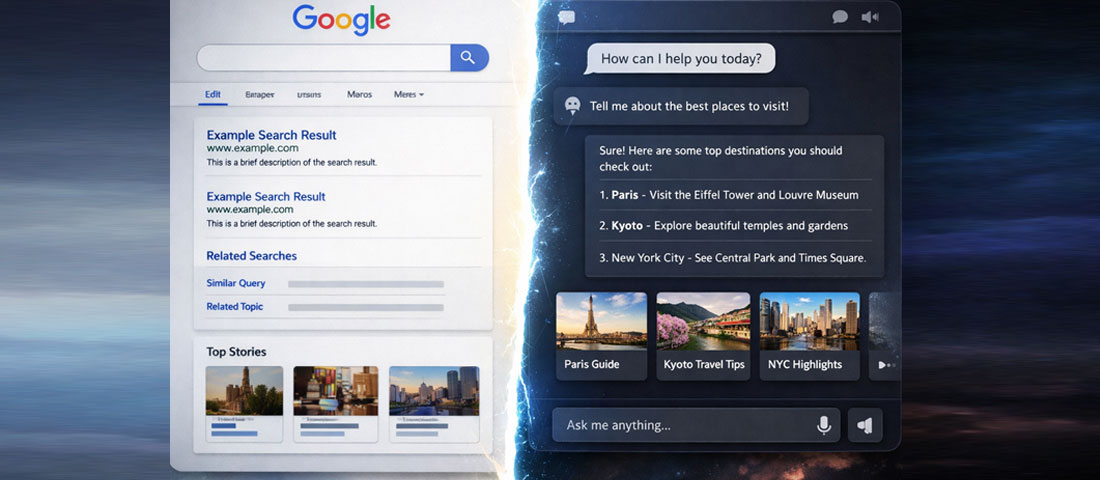
If you have spent any time in digital marketing circles in 2025 or 2026, you have heard the acronyms: AEO, GEO, AIO, LLMO. Four terms. Four slightly different angles. One enormous shift in how people find businesses on the internet.
What this guide covers
- 1. Why AI Search Has Changed Everything
- 2. What Is AEO — Answer Engine Optimization?
- 3. What Is GEO — Generative Engine Optimization?
- 4. What Is AIO — AI Optimization?
- 5. What Is LLMO — Large Language Model Optimization?
- 6. AEO vs GEO vs AIO vs LLMO — Complete Comparison
- 7. How to Get Your Business Found on ChatGPT and Perplexity
- 8. How to Structure Content So AI Tools Can Understand and Cite It
- 9. The Step-by-Step AI Search Optimization Framework
- 10. Frequently Asked Questions
- 11. Conclusion: Why Acting Now Matters More Than Acting Perfectly
This guide brings all four together in one place. We will explain exactly what each term means, how it differs from the others, and — critically — what your business needs to do about it right now. Whether you run a business in Mumbai, New York, or London, this guide will give you a complete, practical framework for the AI search era.
Why AI Search Has Changed Everything
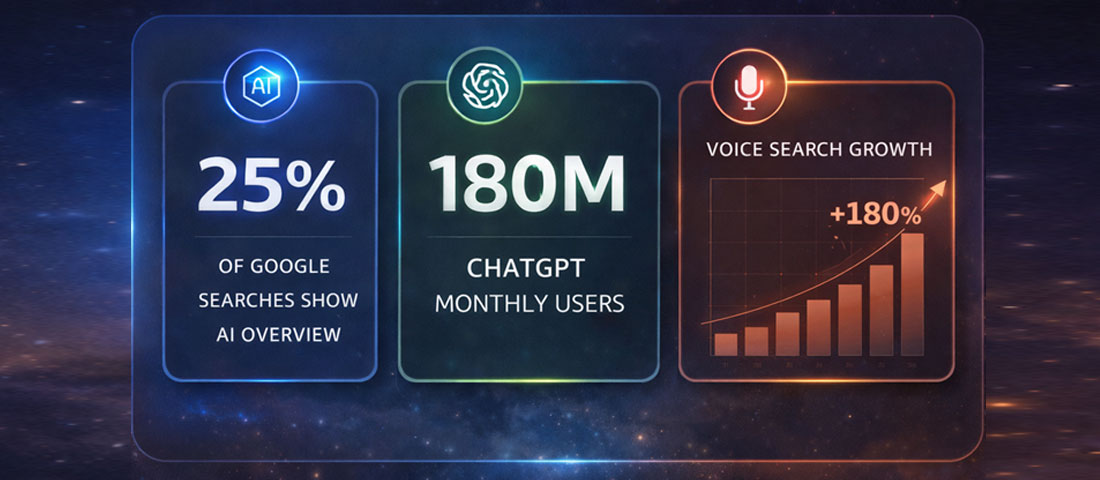
For roughly 25 years, SEO had one goal: get your website ranked in the top 10 blue links on Google. That model is not dead — but it is no longer the whole picture. Something fundamental has shifted:
- Over 25% of Google searches in the USA now trigger an AI Overview — where Google answers the question directly without users needing to click any link
- ChatGPT has 180 million+ monthly active users who ask it questions and act on its recommendations without opening a single website
- Perplexity AI processes millions of searches daily and is the preferred research tool for millions of professionals in the USA and UK
- Voice search through Siri, Alexa, and Google Assistant is used by over 50% of smartphone users in the USA daily
- Microsoft Copilot, integrated into Windows and Microsoft 365, answers work-related queries for hundreds of millions of enterprise users
The result: your potential customers are getting answers and making purchasing decisions through AI tools that may never show them a list of websites. AEO, GEO, AIO, and LLMO are the solution to this.
What Is AEO — Answer Engine Optimization?
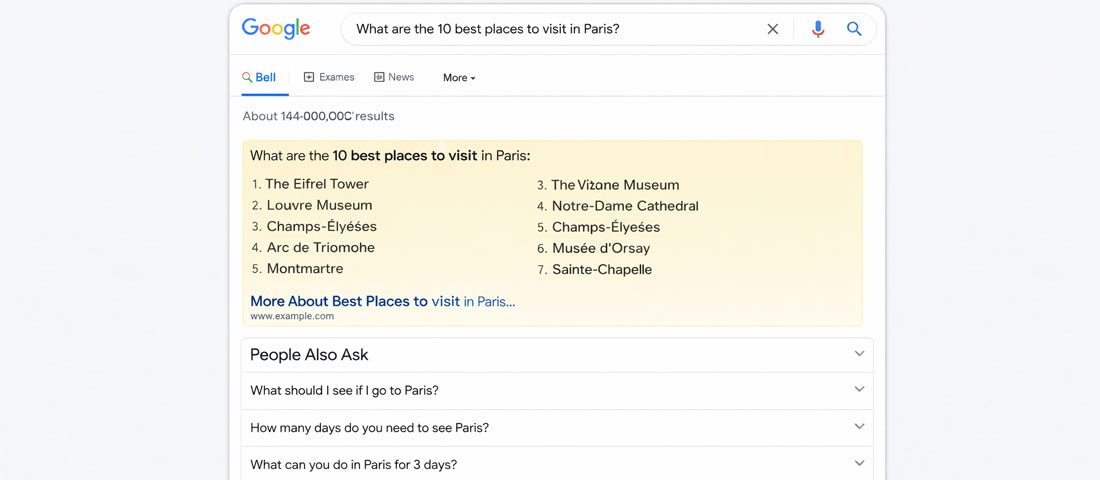
AEO stands for Answer Engine Optimization. It is the process of structuring your content so that search engines and AI assistants serve it as a direct answer to user queries — appearing in Google featured snippets, People Also Ask boxes, voice search responses, and Google AI Overviews.
The term “answer engine” reflects how Google has evolved from a “find me websites” tool into an “answer my question” tool. AEO is about being that answer.
What AEO Involves in Practice
- Writing content in a clear question-and-answer format
- Adding FAQ sections with FAQPage schema markup to every key page
- Targeting “People Also Ask” questions with concise answers (40–60 words)
- Optimising for voice search queries — longer, conversational full sentences
- Using HowTo schema for step-by-step processes
- Winning Google featured snippets — the highlighted answer box at position zero
What Is GEO — Generative Engine Optimization?
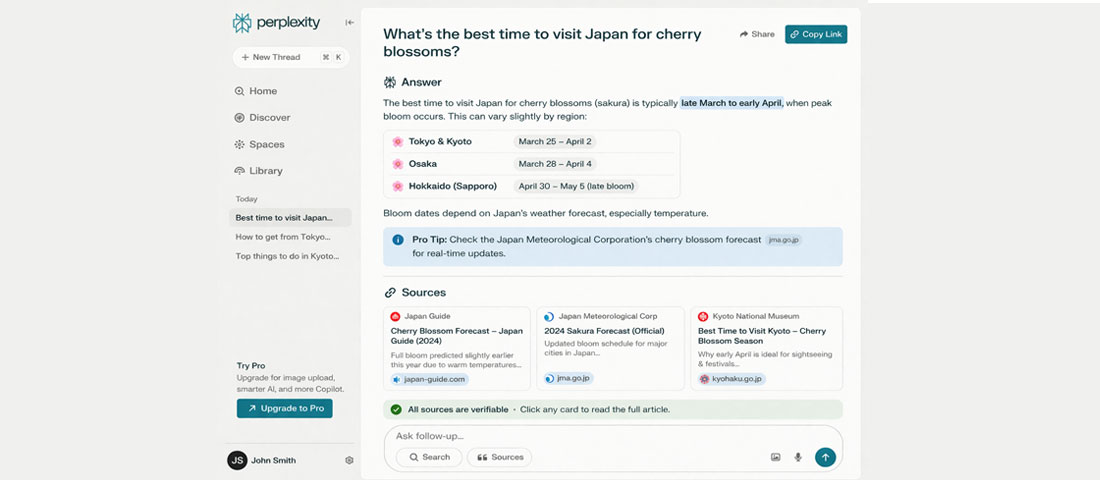
GEO stands for Generative Engine Optimization. It focuses specifically on making your content citable and trustworthy enough to be referenced by generative AI platforms — such as ChatGPT, Perplexity, Claude, and Google Gemini — when they generate synthesised responses.
Simple example: if someone asks ChatGPT “what are the best web design companies in India for US businesses?” — GEO is about ensuring your business is one of the sources it cites and recommends.
What GEO Involves in Practice
- Creating deeply authoritative long-form content that AI platforms trust
- Building topical authority — comprehensive coverage of your subject area
- Earning citations on high-authority websites (industry publications, directories, news sites)
- Ensuring your brand appears consistently and correctly across the web
- Building Wikipedia or Wikidata entity entries where applicable
- Monitoring citation frequency on platforms like Perplexity and ChatGPT
What Is AIO — AI Optimization?
AIO stands for AI Optimization. It is the broadest of the four terms — an umbrella practice covering everything you do to ensure that AI systems, across all platforms, can accurately understand, trust, and recommend your business.
Think of AIO as the strategic layer. If AEO is a tactic (write FAQ schemas) and GEO is a tactic (build topical authority), AIO is the strategy that coordinates all of them toward one goal: maximum and accurate AI visibility.
What AIO Involves in Practice
- Brand entity optimisation — ensuring AI systems have a correct, complete understanding of who you are
- Knowledge graph presence — appearing accurately in Google’s Knowledge Graph
- Cross-platform accuracy — consistent business information across Google Business Profile, Bing, Apple Maps, directories
- Reputation signals — review management and online reputation directly feed into AIO
- Monitoring how AI tools describe your business — regularly testing what ChatGPT, Gemini, Perplexity say about you
What Is LLMO — Large Language Model Optimization?
LLMO stands for Large Language Model Optimization. It is the most technical of the four — focused on how the large language models powering tools like ChatGPT, Google Gemini, Microsoft Copilot, and Claude learn about, interpret, and represent your brand.
LLMs are trained on enormous datasets scraped from the web. LLMO ensures your content is structured, entity-rich, accurate, and well-cited enough that when an LLM is trained or updated, your business is represented correctly and favourably.
What LLMO Involves in Practice
- Entity-rich content creation — clear entity signals (brand name, location, services, team)
- Semantic content architecture — topics, subtopics, and entity relationships are clearly defined
- Consistent factual accuracy across all web presence — contradictory information confuses LLMs
- High E-E-A-T signals — Experience, Expertise, Authoritativeness, Trustworthiness
- Strategic anchor content — definitive, comprehensive resources on core topics
AEO vs GEO vs AIO vs LLMO — Complete Comparison
| Factor | AEO | GEO | AIO | LLMO |
|---|---|---|---|---|
| Full Name | Answer Engine Optimization | Generative Engine Optimization | AI Optimization | Large Language Model Optimization |
| Primary Goal | Appear as direct answers in search | Be cited by generative AI platforms | AI systems understand & recommend you | LLMs accurately learn & represent your content |
| Key Platforms | Google snippets, Voice search, AI Overviews | Perplexity, ChatGPT search, Claude | ChatGPT, Gemini, Copilot — all AI tools | GPT-4, Gemini, Llama, Claude training & retrieval |
| Core Technique | FAQ schema, Q&A formatting | Topical authority, citations | Entity signals, brand consistency | Semantic structure, E-E-A-T, entity-rich content |
| Timeline to Results | 4–8 weeks | 3–6 months | 2–4 months | 3–8 months |
| Difficulty | Low–Medium | Medium–High | Medium | High |
| Best For | Voice & zero-click search, quick wins | Research & comparison queries | Overall AI brand visibility | Long-term AI knowledge representation |
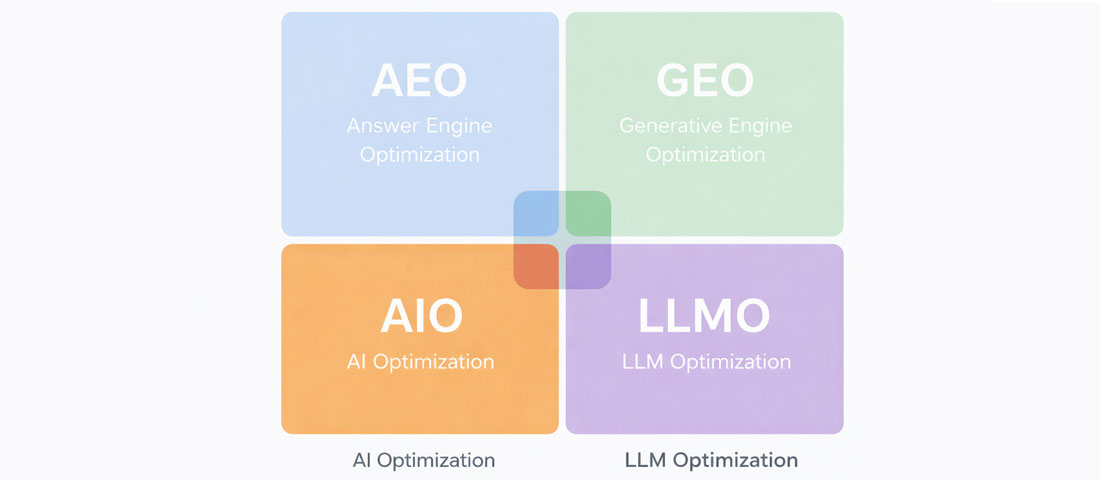
Key Takeaway: AEO delivers the quickest results but targets a narrower part of the AI landscape. GEO and LLMO require more investment but deliver the deepest and most durable AI visibility. AIO is the coordinating strategy that ties all three together. Start with AEO, build toward GEO, and treat AIO as the ongoing strategic layer across everything you do.
How to Get Your Business Found on ChatGPT and Perplexity
Getting found on ChatGPT and Perplexity requires understanding how each platform surfaces businesses differently.
How ChatGPT Surfaces Businesses
ChatGPT draws on two sources: its training data (periodically updated from large web crawls) and, in its web-enabled versions, real-time web searches. To appear in ChatGPT responses you need a combination of GEO and LLMO strategies — ensuring your business appears on authoritative pages that ChatGPT trusts, that your brand information is accurate and consistent across the entire web, and that you have built genuine topical authority so ChatGPT surfaces your business consistently across multiple authoritative sources.
How Perplexity Surfaces Businesses
Perplexity uses real-time web search as its primary mechanism. To appear in Perplexity answers: create high-quality authoritative articles that rank well on Google (Perplexity finds these through real-time search), get your business listed in directories and comparison sites that Perplexity trusts, generate positive third-party mentions on high domain authority sites, and use clear citable statistics and specific claims that Perplexity can extract as evidence.
A practical test to try right now: Open ChatGPT and Perplexity and type “best web design companies in India for [your target country] businesses.” Note which businesses appear and which sources are cited. This is your competitive benchmark — and it shows exactly what you need to do to appear alongside those results.
How to Structure Content So AI Tools Can Understand and Cite It
1. Lead with the Direct Answer
Every section of your content should answer its primary question in the first two sentences. AI tools and featured snippet algorithms extract the most direct, clear answers — so your answer needs to be at the top, not buried in context.
2. Use Question-Format Headings
Structure your H2 and H3 headings as complete questions that match how people actually search. “What is Answer Engine Optimization?” is a better heading than “Answer Engine Optimization Overview” because it directly matches a search query.
3. Add Data, Statistics, and Specific Claims
AI tools — particularly Perplexity and ChatGPT in search mode — prioritise citing specific, verifiable data over vague generalisations. Integrate accurate statistics and specific figures into your content. Even “WordPress powers over 40% of all websites” is more citable than “WordPress is very popular.”
4. Build Content Clusters
A single great article is less powerful than a cluster of 5 to 10 interlinked articles covering a topic from every angle. This creates the topical authority signals that both Google and generative AI tools use to assess expertise.
5. Implement Schema Markup Systematically
At minimum, every page should have Organisation schema. Service pages need Service schema. Blog posts need Article schema. FAQ sections need FAQPage schema. Local businesses need LocalBusiness schema. Each schema type directly communicates structured information to AI systems.
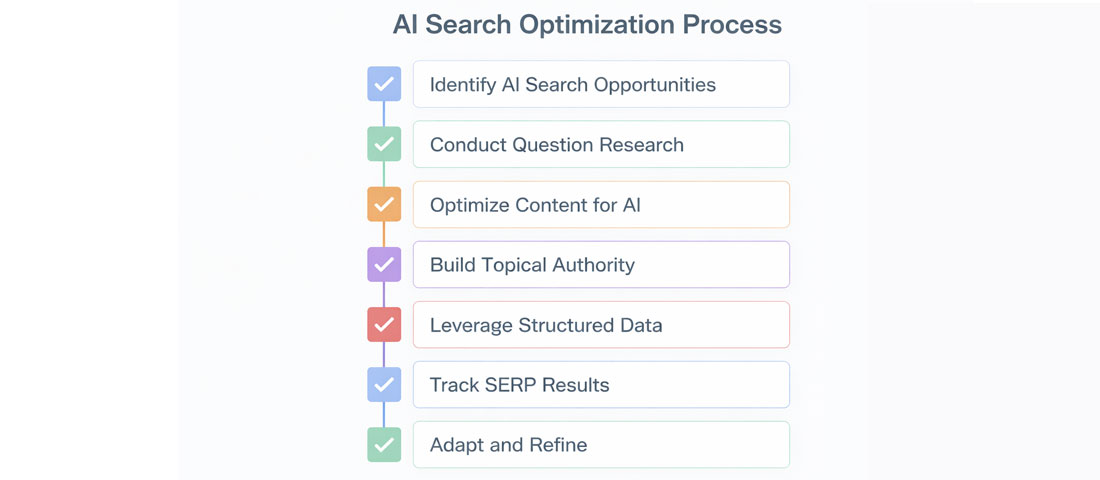
The Step-by-Step AI Search Optimization Framework
-
Conduct an AI visibility audit
Test what ChatGPT, Perplexity, and Google AI Overviews say about your business and core topics. Document where you appear, what is said, and where competitors appear instead. This takes 2–3 hours and gives you a clear gap analysis. -
Fix your brand entity signals
Ensure your business information — name, address, phone, description, services — is identical across Google Business Profile, Bing Places, your website, LinkedIn, and all directories. Inconsistency weakens your knowledge graph presence. -
Add FAQ sections and schema markup to key pages
Add 5–7 FAQ questions with comprehensive paragraph-length answers to every important service page and blog post. Implement FAQPage schema on each. This is your fastest path to AEO wins — featured snippets can appear in as little as 4 weeks. -
Restructure content with question-format headings
Audit your top 10 most important pages. Rewrite section headings as complete questions where possible. Ensure each section leads with a direct, concise answer. This single change can significantly improve AI-answer appearances. -
Build your topic cluster architecture
For each core service area, create a pillar post plus 4–6 supporting posts covering specific subtopics. Interlink them deliberately. This creates the topical authority signals that AI tools use to assess expertise. -
Pursue citations from authoritative sources
Proactively seek mentions in industry publications, comparison articles, and reputable directories. Guest posts on respected industry blogs and expert commentary in news articles contribute to the citation signals GEO and LLMO depend on. -
Monitor, measure, and iterate quarterly
AI search evolves faster than traditional SEO. Set a quarterly AI visibility review — test your appearance on key AI platforms, track featured snippet rankings, monitor citation frequency on Perplexity, and adjust your strategy based on results.
Is your business invisible on ChatGPT, Perplexity & Google AI Overviews?
Neel Networks offers complete AEO, GEO, AIO, and LLMO services from India — at 50–70% less than comparable agencies in the USA, UK, or Australia. We start with a free AI visibility audit.
Explore AIO / AEO / GEO Services Get a Free Quote WhatsApp Us
Frequently Asked Questions
| What is the difference between AEO, GEO, AIO and LLMO? | AEO (Answer Engine Optimization) focuses on getting your content surfaced as direct answers in Google featured snippets, voice search, and AI Overview results. GEO (Generative Engine Optimization) focuses on making your content citable by generative AI platforms like ChatGPT and Perplexity when they synthesise long-form answers. AIO (AI Optimization) is the broader strategic practice of ensuring AI systems understand, trust, and recommend your brand across all AI touchpoints. LLMO (Large Language Model Optimization) is the most technical layer — it focuses on how your content is interpreted and weighted by the large language models that power tools like ChatGPT, Gemini, and Claude. |
| Do I need all four or can I focus on just one? | All four work best as an integrated strategy. However, if you are starting from scratch with limited resources, the priority order is: first AEO (fastest results — featured snippets in 4–8 weeks), then AIO (brand entity signals), then GEO (topical authority and citations), and finally LLMO (advanced technical optimisation). Each layer builds on the previous one, and together they create a comprehensive AI search visibility strategy. |
| How long does it take to see results from AI search optimization? | AEO results — Google featured snippets and People Also Ask appearances — can be achieved in as little as 4 to 8 weeks for well-optimised FAQ content. AIO results typically become noticeable within 2 to 4 months. GEO and LLMO results, which depend on building genuine topical authority and earning citations, generally take 3 to 6 months for meaningful improvements. |
| How do I get my business found on ChatGPT and Perplexity? | Getting found on ChatGPT and Perplexity requires a combination of GEO and LLMO strategies. You need to create deeply authoritative content that covers your topic area comprehensively, earn citations from high-authority industry websites and directories, ensure your brand appears consistently and accurately across the web, and structure your content with clear entity signals so AI systems can correctly identify and describe your business. |
| Is AI search optimization replacing traditional SEO? | AI search optimization is not replacing traditional SEO — it is expanding on top of it. Traditional SEO remains important and effective. However, over 25% of Google searches now trigger AI Overviews that show direct answers before any links, and hundreds of millions of people use ChatGPT, Perplexity, and other AI tools to research purchases. The smart approach is to layer AEO, GEO, AIO, and LLMO strategies on top of a solid traditional SEO foundation. |
| Can small businesses benefit from AEO, GEO, AIO and LLMO? | Absolutely — in some respects, small businesses in focused niches benefit more from AI search optimization than large enterprises. Traditional SEO in competitive markets is dominated by companies with enormous budgets. AI search rewards content quality, specificity, and genuine expertise over sheer domain authority. A small business that creates the most comprehensive and clearly structured content on its specific topic can win AI citations and featured snippets against much larger competitors. |
| What is LLMO and why does it matter? | LLMO stands for Large Language Model Optimization. It is the practice of structuring and signalling your content so that the large language models powering AI tools like ChatGPT, Google Gemini, and Microsoft Copilot accurately learn about, understand, and favourably represent your brand and expertise. LLMO focuses on ensuring your content is high-quality, entity-rich, consistently accurate, and well-cited enough to be weighted positively during both model training and real-time retrieval. |
Conclusion: Why Acting Now Matters More Than Acting Perfectly
AEO, GEO, AIO, and LLMO are not theoretical future developments — they describe search behaviour happening right now, at enormous scale. The businesses that are visible in AI-powered tools are capturing leads and customers that businesses without AI visibility will never see.
The good news: you do not need a perfect strategy overnight. The businesses winning in AI search today started 6 to 12 months ago with imperfect first steps — FAQ schemas added to key pages, a few well-structured pillar posts, a brand entity cleanup. The question is what you do next.
Neel Networks specialises in AEO, GEO, AIO, and LLMO services for businesses across the USA, UK, Canada, Australia, and beyond — at pricing that reflects the efficiency advantage of our Mumbai-based team. Start with a free strategy consultation.
Ready to get your business visible on AI search platforms?
Book a free AEO / GEO / AIO / LLMO strategy session with Neel Networks today.