6 Proven Lead Generation Strategies That Still Work in 2026
Lead generation is the process of attracting potential customers and converting them into people who have expressed interest in your business. It sounds simple. In practice, it is one of the most consistently mismanaged areas of digital marketing — either neglected entirely, or approached with tactics that worked a decade ago and quietly stopped delivering.
What this guide covers
- 1. What Makes a Lead Generation Strategy “Work” in 2026?
- 2. Strategy 1: SEO-Driven Content That Captures Buyer Intent
- 3. Strategy 2: A High-Converting Website With Clear Lead Paths
- 4. Strategy 3: Google Business Profile and Local Search Optimisation
- 5. Strategy 4: Lead Magnets and Email List Building
- 6. Strategy 5: Paid Search and Social Advertising for Immediate Pipeline
- 7. Strategy 6: Referral Systems and Partnership-Based Lead Generation
- 8. How to Measure Lead Generation Performance
- 9. Building a Lead Generation System: Where to Start
- 10. Frequently Asked Questions About Lead Generation
- 11. Conclusion: Choose Your System, Then Work It Consistently
In 2026, the lead generation landscape has shifted meaningfully. AI-powered search is changing how people discover businesses. Buyers are more research-literate and more sceptical of generic outreach than ever before. Attention is fragmented across more channels. And yet — the businesses that invest in the right strategies are generating more high-quality leads at lower cost than at any previous point in the web’s history.
This guide covers six lead generation strategies that are genuinely effective right now: not theoretical frameworks, but practical approaches that work across industries, business sizes, and markets including the USA, UK, Canada, Australia, and India.
What Makes a Lead Generation Strategy “Work” in 2026?
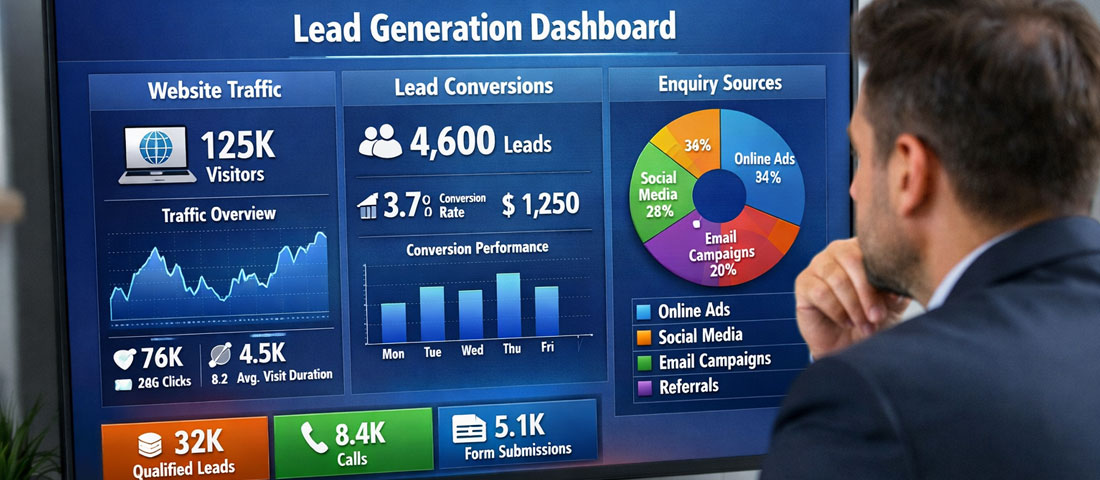
A lead generation strategy works when it consistently delivers contacts who have a genuine problem your business solves, who are at a stage in their decision process where they can be moved toward a purchase, and who can be acquired at a cost that makes the business model viable. That last point is critical — many businesses generate leads at a cost that only makes sense if the lifetime value of the customer is extremely high. For most SMEs, the goal is not maximum lead volume. It is the right volume of pre-qualified leads at a sustainable cost per acquisition.
In 2026, “working” also means being resilient to platform changes. Strategies that depend entirely on a single algorithm, a single ad platform, or a single content format are fragile. The businesses with the most stable lead pipelines are those that have diversified across at least two or three channels and built assets — content, email lists, review profiles — that they own and control regardless of what any platform does.
Strategy 1: SEO-Driven Content That Captures Buyer Intent
Search engine optimisation remains the highest-ROI lead generation channel for most businesses over a 12–24 month horizon. The reason is compounding: a well-optimised page that ranks for a high-intent keyword generates leads every day without ongoing spend. The initial investment pays back repeatedly, unlike paid advertising where traffic stops the moment the budget stops.
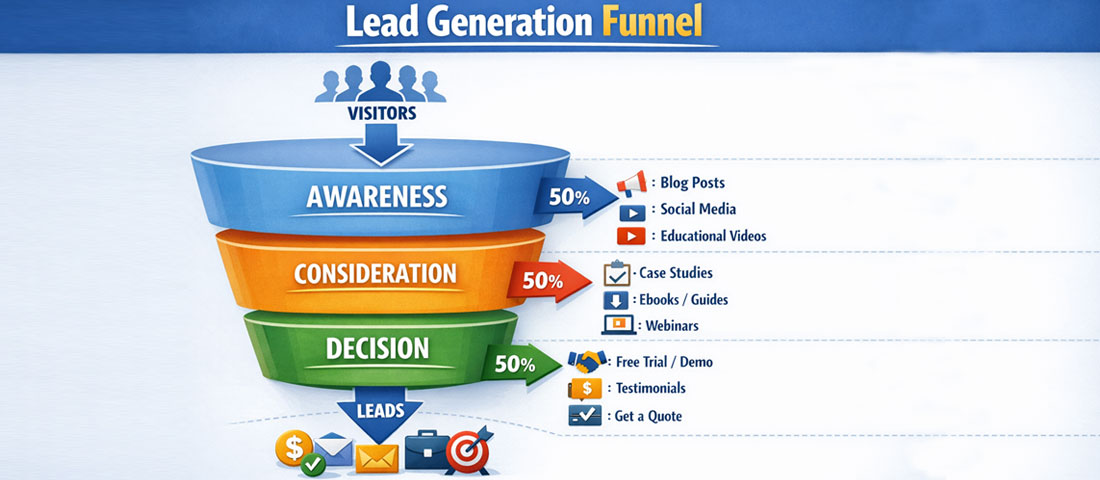
The key distinction in 2026 is buyer intent. Not all search traffic is created equal. Someone searching “what is web design” is curious. Someone searching “web design agency Mumbai for eCommerce” is a buyer. Your SEO-driven content strategy needs to target both ends of the funnel — awareness content that builds brand authority, and bottom-of-funnel pages that capture people actively looking for what you sell.
How to structure SEO content for lead generation:
-
Map content to the buyer journey
Awareness stage: educational blog posts, industry guides, how-to content. Consideration stage: comparison articles, case studies, “how to choose” guides. Decision stage: service pages, pricing pages, testimonial pages, location-specific landing pages. Each stage needs its own content and its own conversion mechanism. -
Target long-tail, high-intent keywords
“web design” is competitive and low-intent. “affordable web design for small business UK” is specific, has clear intent, and is far easier to rank for. Build a library of long-tail keyword targets that collectively capture significant buyer-intent volume. -
Optimise for AI search surfaces
Google’s AI Overviews and other AI-powered search experiences in 2026 extract answers from well-structured pages. FAQ sections, clear headings, and concise paragraph answers improve your visibility in these surfaces — which now appear above traditional organic results for many queries. -
Include lead capture on every content page
A blog post that ranks well but has no conversion path is a missed opportunity. Every content page should include a contextual CTA: a relevant lead magnet download, a free consultation offer, or at minimum a prominent link to a contact page. The CTA should feel like a natural next step, not an interruption.
Strategy 2: A High-Converting Website With Clear Lead Paths
Businesses spend significant money driving traffic — through SEO, paid ads, social media, and referrals — and then lose the majority of potential leads because their website does not convert effectively. Traffic without conversion infrastructure is a leaky bucket. Before investing more in any traffic channel, make sure the destination is optimised.
A high-converting website is not necessarily a beautiful one. It is one where a visitor who has the problem you solve can quickly understand that you solve it, feel confident enough to trust you, and find it easy to take the next step. Those three requirements — clarity, credibility, and ease — are the foundation of conversion-focused web design.
The conversion elements that generate leads:
Above-the-fold clarity: Within three seconds of landing on your homepage or any service page, a visitor should understand exactly what you do, who you do it for, and what they should do next. If your headline is vague, your value proposition is buried, or the primary CTA is not immediately visible, you are losing leads before they have read a single word of body copy.
Multiple contact paths: Different visitors prefer different contact methods. Offer a contact form, a phone number, a WhatsApp link, and optionally a live chat widget. Do not force everyone through a single channel. The easier you make it to get in touch, the more people will.
Social proof near the CTA: The moments before a visitor decides whether to enquire are high-anxiety moments. Placing customer reviews, star ratings, client logos, or specific results statements immediately adjacent to your CTA button addresses the hesitation that would otherwise cause them to leave without converting.
Frictionless forms: Long enquiry forms are lead killers. For initial contact, ask for only what you genuinely need: name, email or phone, and a brief description of what they need. You can gather additional information during the follow-up conversation. Every additional form field reduces completion rates — the data is consistent and well-documented.
Strategy 3: Google Business Profile and Local Search Optimisation
For any business that serves clients in a specific geographic area — whether that is a city, a region, or even an entire country — Google Business Profile (GBP) is one of the highest-leverage lead generation assets available, and it is free to maintain. A well-optimised GBP listing appears in the Local Pack (the map and three-business panel that appears prominently in local search results) and in Google Maps, both of which drive direct enquiries, phone calls, and website visits from people who are actively searching for what you offer right now.
In 2026, GBP optimisation goes well beyond setting up a profile. The businesses that dominate local pack rankings are those that actively manage their profiles: updating business information, posting regular updates, responding to every review (positive and negative), uploading fresh photos, and using the Q&A section to pre-answer common enquiries. Google’s local ranking algorithm considers relevance, distance, and prominence — all three can be influenced through active GBP management.
Reviews are particularly powerful. A business with 50 reviews averaging 4.8 stars will almost always outperform a competitor with 5 reviews averaging 5.0 stars. The volume of reviews signals genuine activity and customer engagement. Building a systematic approach to requesting reviews from satisfied customers — through post-service follow-up emails, WhatsApp messages, or direct in-person requests — is one of the most effective lead generation improvements a local business can make.
Strategy 4: Lead Magnets and Email List Building
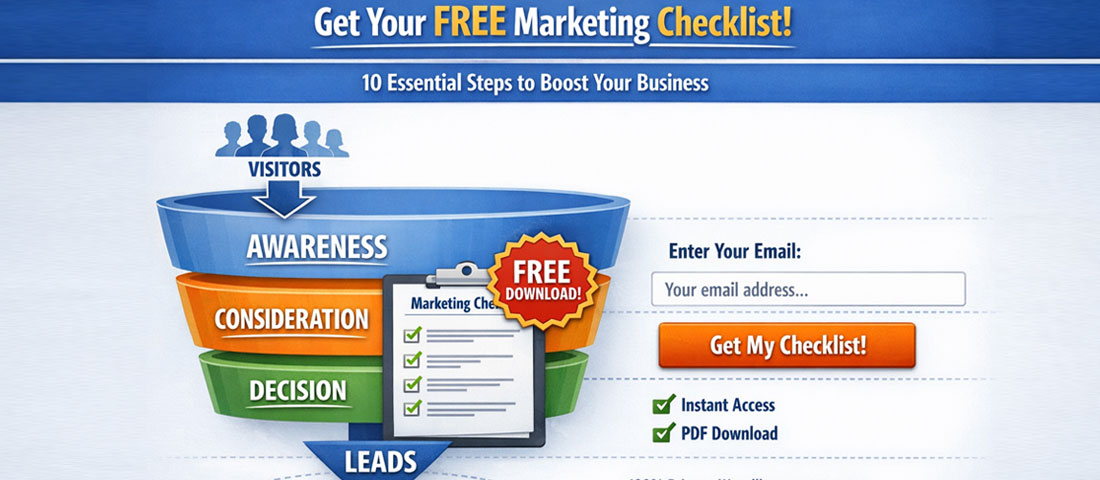
A lead magnet is a piece of valuable content or a useful tool offered free in exchange for an email address. It turns anonymous website visitors into identified prospects with whom you can maintain an ongoing relationship. An email address from a genuinely interested prospect is one of the most valuable assets a business can own — unlike social media followers, you own your email list outright and can contact those people regardless of what any platform decides to do with its algorithm.
The most effective lead magnets in 2026 are highly specific and immediately useful. Generic lead magnets (“Sign up for our newsletter”) have near-zero conversion rates. Specific lead magnets that solve a precise problem (“Download our eCommerce Website Launch Checklist” or “Get our Free Website Speed Audit”) convert significantly better because the value proposition is concrete and the audience self-selects — only people who genuinely have that problem download the resource.
Lead magnet formats that work well for service businesses:
Checklists & Templates
Practical, immediately usable tools that save time or reduce errors. Examples: “Website Launch Checklist,” “Social Media Content Calendar Template,” “SEO Audit Checklist.” High perceived value, low production cost.
Free Audits
Offer a free analysis of something the prospect cares about — website speed, SEO health, social profile completeness. Delivers immediate value and opens a natural conversation about how you can help address issues found.
Case Studies & Results Reports
Detailed breakdowns of how you solved a client’s specific problem. Particularly effective for high-value B2B services where prospects are evaluating multiple providers and need evidence of capability before committing to a conversation.
Industry Guides & Research
Comprehensive guides covering a topic your target audience is actively researching. Positions you as a credible authority and attracts prospects at the awareness and consideration stages of the buying journey.
Calculators & Assessment Tools
Interactive tools that give personalised results — ROI calculators, pricing estimators, readiness assessments. High engagement and high perceived value because results are tailored to the individual user.
Free Consultation or Strategy Call
For higher-value services, a free 20-30 minute consultation is itself a lead magnet. The low barrier to entry (no payment required) combined with the personalised value converts well for prospects who are already in consideration mode.
Once you have an email list, the follow-up sequence matters as much as the initial capture. A new subscriber should receive a welcome sequence of three to five emails over the first two weeks: the promised resource, a brief introduction to your business and values, one or two pieces of genuinely useful content, and a soft CTA to explore your services or book a consultation. Subscribers who receive a structured welcome sequence are significantly more likely to convert than those who receive only the initial resource and then hear nothing for weeks.
Strategy 5: Paid Search and Social Advertising for Immediate Pipeline
Organic strategies — SEO, content marketing, GBP — take time to build. Paid advertising delivers traffic and leads immediately. For new businesses, for businesses launching new services, or for businesses that need to fill pipeline gaps quickly, a well-run paid acquisition strategy is the fastest route to generating qualified enquiries.
Google Ads targeting high-intent search queries remains the most reliably effective paid channel for B2B service businesses and local businesses. When someone searches “website redesign agency” or “eCommerce development company,” they are expressing purchase intent in that moment. A well-structured Google Ads campaign can put your business in front of that person at exactly the right time.
Meta (Facebook and Instagram) advertising works differently — it is interruption-based rather than intent-based. Users are not searching for you; you are finding them based on demographic and interest targeting. This makes Meta ads more effective for building awareness and nurturing consideration, rather than capturing immediate buying intent. Meta works particularly well for lead magnets, free trial offers, and any service where the target audience can be defined by demographic characteristics or interests.
Paid advertising fundamentals that drive lead quality:
Match landing pages to ad copy precisely: The most common cause of poor paid advertising performance is sending ad clicks to a generic homepage. Every ad campaign should have a dedicated landing page that exactly matches the promise made in the ad. If your ad says “Free Website Audit,” the landing page should immediately deliver the free website audit offer — not a homepage with seven different service options.
Use negative keywords aggressively in Google Ads: Negative keywords prevent your ads from showing for irrelevant searches. A web design agency advertising on “web design” should add negative keywords like “free,” “DIY,” “tutorial,” “course,” “job,” “salary” to avoid paying for clicks from students, job seekers, and people looking for free tools. A well-maintained negative keyword list can reduce wasted spend by 30–50%.
Track conversions, not just clicks: Many businesses run paid campaigns and measure success by click-through rate or cost per click. The only metric that matters is cost per lead (CPL) and ultimately cost per acquired customer (CPA). Set up conversion tracking for every lead action — form submissions, phone calls, WhatsApp clicks — and optimise campaigns based on which ad groups, keywords, and audiences generate actual leads at an acceptable cost.
Strategy 6: Referral Systems and Partnership-Based Lead Generation
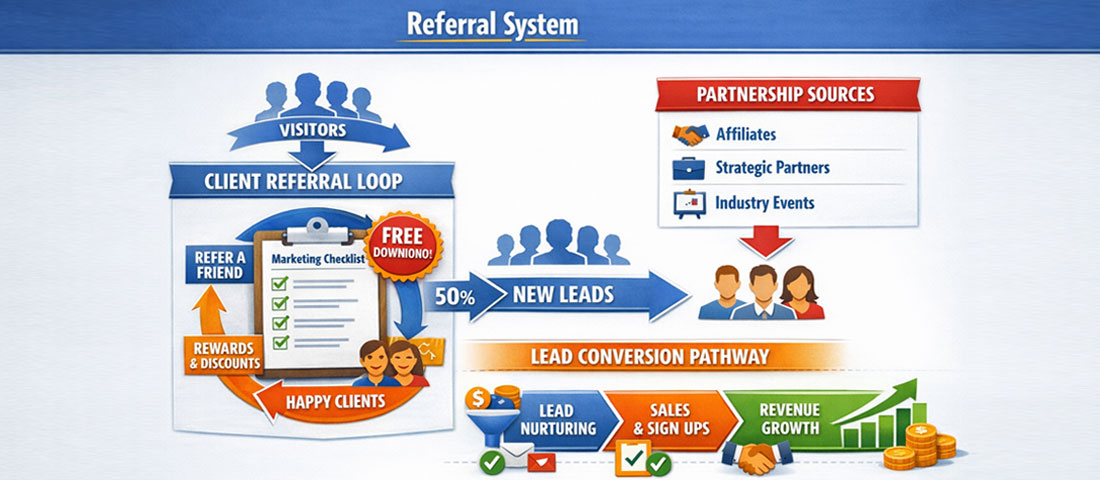
Referrals are consistently the highest-converting lead source for service businesses. A prospect who arrives through a trusted recommendation from someone they know has already overcome the trust barrier that cold leads face. They arrive pre-sold on your credibility and typically require far less nurturing before converting. The challenge is that most businesses treat referrals as something that happens passively — they rely on satisfied clients to spontaneously recommend them without ever building a system to make it happen more reliably.
A referral system turns passive word-of-mouth into an active, predictable lead source. It has three components: identifying your best potential referrers, giving them a clear reason and mechanism to refer, and following up consistently to keep your business top of mind.
Client referral programmes: Ask satisfied clients directly. The timing matters — the best moment to ask for a referral is immediately after delivering a positive result, when client satisfaction is at its peak. A simple, direct request (“If you know anyone else who might benefit from what we’ve built together, I would genuinely appreciate an introduction”) converts well because it is personal and specific. Incentive-based programmes (offering a discount or gift for successful referrals) work for some businesses, but the personal ask often outperforms formal incentive structures for service businesses.
Strategic partnerships: Identify businesses that serve the same audience as you without directly competing, and explore referral relationships. A web design agency might partner with a business consultant, a marketing agency that does not offer web services, an accountant whose clients regularly need websites, or a printing company whose clients need digital presence. Formalise these relationships: agree on how referrals will be handled, who the contact person is on each side, and whether any reciprocal arrangement makes sense.
Online platforms and marketplaces: In 2026, platforms like Clutch, DesignRush, GoodFirms (for agencies), Bark, and Upwork function as referral sources at scale. Maintaining well-optimised profiles on relevant platforms puts your business in front of buyers who are already in research mode. These platforms are not passive — they reward active profiles with higher visibility, so regular profile updates, review requests, and responding promptly to enquiries all improve lead volume.
How to Measure Lead Generation Performance
Without measurement, lead generation is guesswork. The goal of measurement is not to generate reports — it is to understand which activities produce qualified leads at an acceptable cost, so you can do more of those and less of everything else.
| Metric | What It Measures | Why It Matters | Tool |
|---|---|---|---|
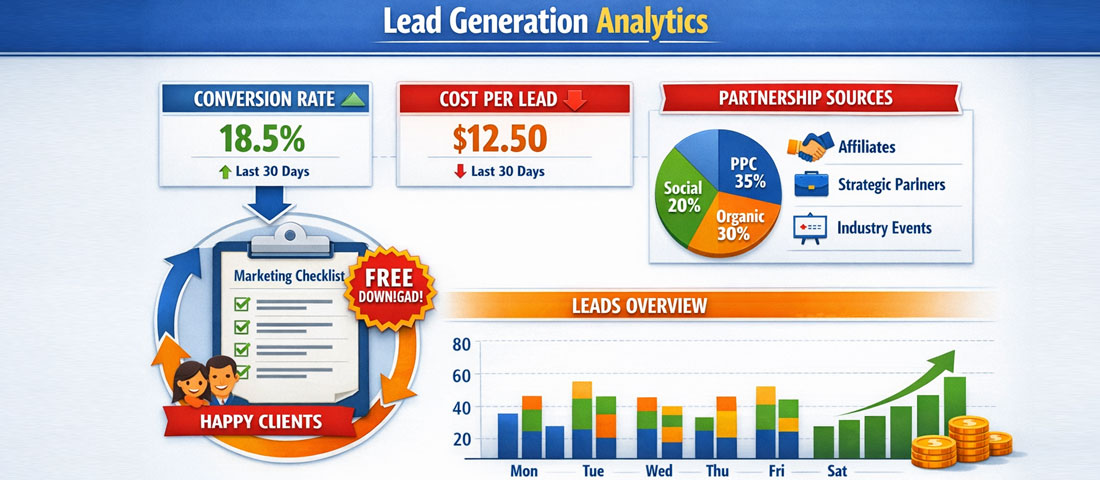
| Conversion Rate | % of visitors who become leads | Identifies website effectiveness | Google Analytics 4 |
| Cost Per Lead (CPL) | Total spend ÷ leads generated | Compares channel efficiency | Ad platforms + CRM |
| Lead-to-Customer Rate | % of leads that become paying clients | Measures lead quality | CRM (HubSpot, Zoho) |
| Customer Acquisition Cost (CAC) | Total marketing spend ÷ new customers | Overall programme efficiency | Spreadsheet / CRM |
| Lead Source Attribution | Which channel produced each lead | Informs budget allocation | GA4 + UTM parameters |
| Time to First Response | How quickly you respond to new leads | Speed directly impacts conversion | CRM pipeline tracking |
One metric that is consistently undervalued is time to first response. Research across industries shows that leads contacted within five minutes of enquiring are 9× more likely to convert than leads contacted after 30 minutes. The longer a lead waits, the more likely they are to have contacted a competitor. Implementing a notification system that alerts your sales or account team the moment a form is submitted or a WhatsApp message arrives is one of the highest-ROI improvements most service businesses can make.
Building a Lead Generation System: Where to Start
Attempting all six strategies simultaneously is a common mistake. It spreads attention too thin, produces mediocre execution across the board, and makes it impossible to determine what is working. A disciplined focus on one or two strategies until they are producing consistent results — then layering in additional channels — produces compounding results over time.
Frequently Asked Questions About Lead Generation
| What is the difference between a lead and a sales-qualified lead? | A lead is anyone who has expressed interest in your business by providing their contact information or initiating contact — a form submission, a phone call, a WhatsApp message, or a download. A sales-qualified lead (SQL) is a lead that has been assessed and determined to meet specific criteria that make them a realistic potential customer: they have the budget, the authority to make a purchasing decision, a genuine need for your service, and a defined timeline. Not all leads become SQLs, and a lead generation strategy that focuses obsessively on volume at the expense of lead quality often produces a pipeline full of contacts that never convert. The goal is qualified leads, not just leads. |
| How many leads should my website be generating per month? | There is no universal benchmark because lead volume depends on traffic levels, conversion rates, average transaction value, sales cycle length, and business capacity. A more useful question is: what conversion rate is my website achieving, and how does it compare to industry averages? For service business websites, a typical enquiry form conversion rate is between 1% and 5% of total visitors. If you are below 1%, your website’s conversion path almost certainly has fixable problems — unclear messaging, hidden contact options, lack of social proof, or slow load times. If you are above 3%, focus your energy on increasing qualified traffic rather than further optimising the website. Start with your conversion rate and work backwards to determine the traffic volume you need to hit your sales targets. |
| Should I use a CRM system to manage leads, and which one is best? | For any business generating more than ten to fifteen leads per month, a CRM (Customer Relationship Management) system is essential rather than optional. Managing leads in a spreadsheet or email inbox is not scalable — leads fall through the cracks, follow-ups are missed, and it is impossible to see pipeline performance at a glance. For small businesses and agencies, HubSpot CRM (free tier) and Zoho CRM are excellent starting points. Both offer contact management, deal pipeline tracking, email integration, and basic reporting without requiring technical setup. For businesses with more complex sales processes, Salesforce or Pipedrive offer more sophisticated automation and reporting. The best CRM is the one your team will actually use consistently — choose one and use it rigorously rather than switching platforms every year in search of a perfect solution. |
| How important is lead nurturing, and what does it involve? | Lead nurturing is the process of building a relationship with prospects who are interested but not yet ready to buy. Research consistently shows that the majority of leads — often 70–80% — are not ready to purchase at the moment they first make contact. Businesses that abandon leads after an initial follow-up are leaving substantial revenue on the table. Effective lead nurturing involves maintaining regular, valuable contact through email sequences, relevant content, check-in messages, and occasional offers or case studies. The goal is to ensure that when the prospect is ready to buy, your business is the one they think of first. For most service businesses, a combination of an automated email sequence and periodic personal follow-up from a team member produces the best nurturing outcomes without requiring significant time investment. |
| What is the most cost-effective lead generation strategy for a small business with a limited budget? | For a small business with a genuinely limited budget, the highest-ROI starting point is almost always Google Business Profile optimisation combined with building a systematic approach to requesting client reviews. Both are free to maintain, both produce results in weeks rather than months, and both directly generate leads from people who are actively searching for your service in your area. The second priority on a limited budget is on-page SEO for your existing website — ensuring title tags, headings, and content are properly optimised for your target keywords costs nothing but time and can meaningfully improve organic search visibility. Paid advertising should generally come after organic foundations are in place unless you have a specific, time-sensitive need to fill pipeline quickly. |
| How long does it take to see results from a lead generation strategy? | The timeline varies significantly by strategy. Google Ads and Meta advertising can generate leads within days of launch, though optimising campaigns for cost efficiency typically takes two to four weeks of testing. Google Business Profile improvements can produce results in two to six weeks as Google indexes updated information and reviews accumulate. SEO-driven content strategies typically take three to six months to produce consistent organic traffic, though individual well-optimised pages may rank faster. Email list building produces results proportionally to the size and engagement of the list — it can take six to twelve months to build a list that generates meaningful lead volume. Referral systems often produce quick initial results if you already have satisfied clients, then build steadily over time as partnership relationships mature. The businesses with the most stable lead pipelines are running two or three strategies simultaneously, so that short-term paid channels fill the gap while long-term organic channels build. |
| What role does website speed play in lead generation? | Website speed has a direct and measurable impact on lead generation performance. Research consistently shows that every additional second of page load time reduces conversion rates — in some studies, a one-second delay reduces conversions by 7%. For mobile users, the impact is even more pronounced. A slow website loses leads at multiple points: potential customers abandon pages before they load, Google deprioritises slow pages in search rankings reducing the traffic you receive, and poor Core Web Vitals scores weaken overall site authority. A website that generates fifty leads per month at a 2% conversion rate would theoretically generate seventy-five leads per month at a 3% conversion rate — with no additional spend on traffic. Improving site speed is therefore one of the highest-leverage investments a business can make in its lead generation performance, and it is an area where a professional web development team can often produce significant improvements relatively quickly. |
Conclusion: Choose Your System, Then Work It Consistently
Lead generation does not reward complexity. It rewards consistency, clarity, and the discipline to build systems rather than chase tactics. The six strategies in this guide — SEO-driven content, conversion-optimised websites, local search presence, lead magnets and email lists, paid acquisition, and referral systems — are not new ideas. They are proven approaches that continue to deliver because they are grounded in how buyers actually behave: they search for solutions, they evaluate credibility, they consult trusted sources, and they make decisions when they feel confident.
The businesses that generate the most leads are not the ones using the most sophisticated technology or the largest budgets. They are the ones that have picked two or three of these strategies, executed them thoughtfully, measured the results, and improved iteratively over time.
At Neel Networks, we build websites and digital marketing foundations that function as active lead generation assets — not digital brochures. If your current website is not contributing meaningfully to your pipeline, or if you are unsure which lead generation strategies make most sense for your business, we are happy to take a look and share our thinking.
Turn Your Website Into a Lead Generation Engine
Neel Networks has helped 450+ businesses across India, the UK, USA, Canada, and Australia build websites that attract, engage, and convert the right visitors. From conversion-optimised design to SEO to structured lead capture systems, we handle the full picture. Get in touch to discuss what a stronger digital foundation could mean for your business.