The Future of eCommerce in 2026: AI, Automation, Design Trends & What’s Next
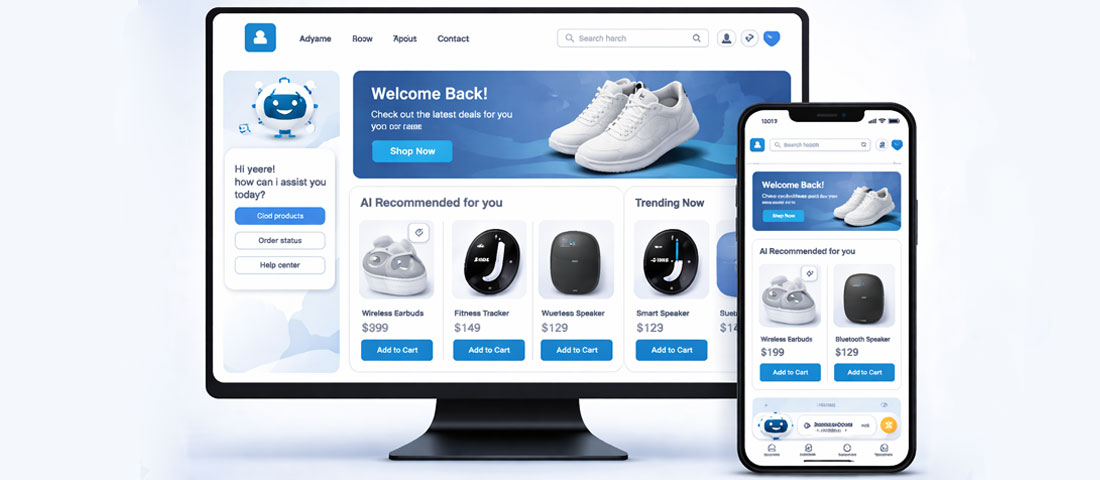
eCommerce in 2026 looks fundamentally different from eCommerce in 2022. The pace of change has accelerated dramatically — driven by AI capabilities that moved from experimental to production-ready, consumer behaviour shifts post-pandemic, new payment technologies, and design standards that have risen sharply as competition for online attention has intensified.
What this guide covers
- 1. The Current State of eCommerce in 2026
- 2. AI and Personalisation: From Experiment to Essential
- 3. Automation Trends Transforming eCommerce Operations
- 4. eCommerce Design Trends Dominating 2026
- 5. Consumer Behaviour Shifts Every Merchant Must Understand
- 6. Emerging Technologies: What to Watch in 2027 and Beyond
- 7. Action Plan for Merchants at Every Stage
- 8. Frequently Asked Questions About eCommerce Trends in 2026
For businesses with existing online stores, understanding these trends is essential for staying competitive. For businesses planning their first eCommerce venture, building with these trends in mind from day one is a significant strategic advantage. This guide covers the state of eCommerce in 2026 — what has changed, what is working, what is coming next, and what action plan makes sense for merchants at every stage.
The Current State of eCommerce in 2026
Global eCommerce sales exceeded $6.3 trillion in 2025 and are projected to pass $7 trillion by the end of 2026. Mobile commerce (mCommerce) now accounts for over 60% of global eCommerce transactions. Social commerce — buying directly through social media platforms — is growing at double the rate of overall eCommerce. And AI-powered personalisation has moved from a luxury of large retailers to an accessible technology for stores of every size.
The competitive landscape has become more challenging: consumer expectations have risen sharply, same-day or next-day delivery has become a baseline expectation in many categories, and the cost of acquiring customers through paid advertising has increased significantly as competition for digital advertising space has grown. The merchants who are winning in 2026 are those who have invested in: AI-powered conversion optimisation, seamless mobile experiences, post-purchase loyalty and retention, and operational automation that allows them to do more with the same team.
AI and Personalisation: From Experiment to Essential
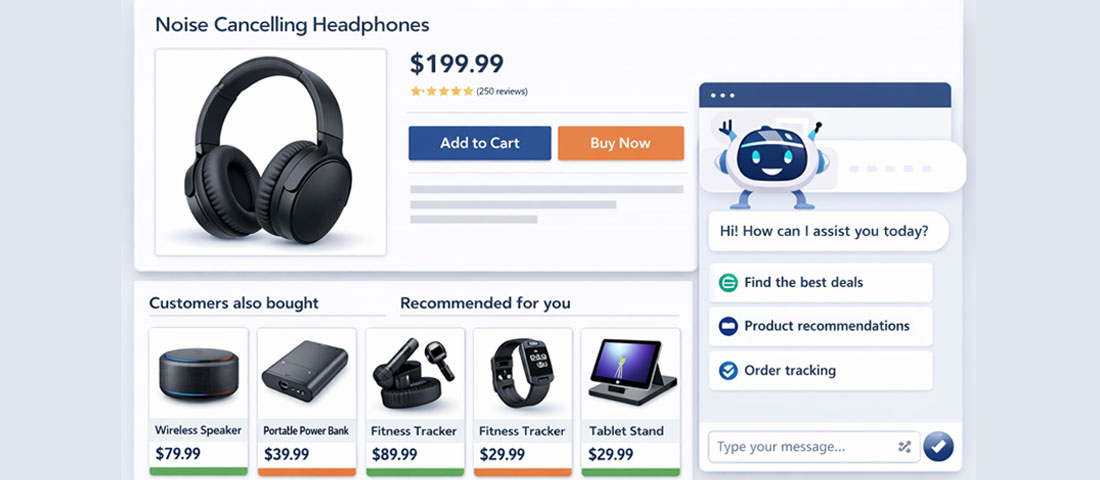
AI-powered personalisation — showing each visitor the most relevant products, promotions, and content based on their behaviour — is now the standard for competitive eCommerce, not a luxury feature.
AI-Powered Product Recommendations
Product recommendation engines — which surface products to individual shoppers based on their browsing and purchase history, products frequently bought together, and aggregate behavioural patterns from similar customers — are one of the highest-ROI eCommerce optimisations available. Amazon famously attributes approximately 35% of its revenue to its recommendation engine. The same technology, once accessible only to enterprise retailers, is now available for mid-market and even small stores through Shopify apps (LimeSpot, Frequently Bought Together, Wiser) and WooCommerce plugins.
Effective product recommendations in 2026 are not just “related products” — they are contextually relevant suggestions that change based on: where the customer is in the buying journey, what they have viewed but not purchased, what time of day or season it is, and what their purchase history reveals about their preferences.
AI-Powered Search
Traditional eCommerce site search — which matches exact keywords — is being replaced by AI-powered search that understands the intent behind a query. A shopper searching “warm jacket for skiing under £200” should see relevant results filtered by price — not just products containing the words “warm” and “jacket.” Searchanise, Algolia, and similar AI-powered search tools transform this experience and consistently improve conversion rates among site search users.
Dynamic Pricing
AI-powered dynamic pricing — adjusting prices based on demand signals, inventory levels, competitor pricing, and time of day — is now widely deployed by sophisticated eCommerce operators. For retailers in competitive categories, dynamic pricing tools allow real-time price competitiveness without manual monitoring. For marketplace sellers (Amazon, eBay, Flipkart), AI-powered repricing is standard practice.
AI Chatbots for eCommerce
AI chatbots specifically trained on product catalogues, sizing guides, return policies, and shipping information are handling a significant and growing proportion of eCommerce customer service interactions — reducing the cost per support interaction while maintaining or improving customer satisfaction. The best eCommerce chatbots in 2026 seamlessly hand off to human agents for complex issues while autonomously resolving the majority of routine queries.
Automation Trends Transforming eCommerce Operations
Order Fulfilment Automation
Automated order routing — sending orders to the nearest fulfilment centre, triggering pick-and-pack instructions, generating shipping labels, and updating tracking information — is now accessible for mid-market merchants through tools like ShipBob, Shipwire, and Shopify Fulfilment Network. The time saved on manual fulfilment operations allows merchants to scale order volume without proportional headcount increases.
Inventory Management Automation
AI-powered inventory management tools analyse historical sales patterns, seasonal trends, and lead times to automatically generate purchase orders before stock runs out. This reduces both stockouts (lost sales when popular products are unavailable) and overstock situations (capital tied up in slow-moving inventory). For eCommerce merchants with dozens or hundreds of SKUs, automated inventory management pays for itself quickly through reduced stockouts and more efficient purchasing.
Email and SMS Marketing Automation
Behavioural trigger-based email automation — abandoned cart sequences, browse abandonment emails, post-purchase review requests, repurchase reminders, and loyalty programme communications — is among the highest-ROI marketing investments available to eCommerce merchants. Tools like Klaviyo (which has become the dominant eCommerce email platform), Omnisend, and Drip allow sophisticated automation workflows based on customer behaviour without requiring manual campaign management.
Returns Automation
Returns management is one of the most operationally expensive aspects of running an eCommerce business. Automated returns portals — where customers self-service their returns by entering order numbers, selecting return reasons, and receiving prepaid labels — reduce manual handling, improve the customer experience of an inherently frustrating process, and provide valuable data on why products are being returned.
eCommerce Design Trends Dominating 2026
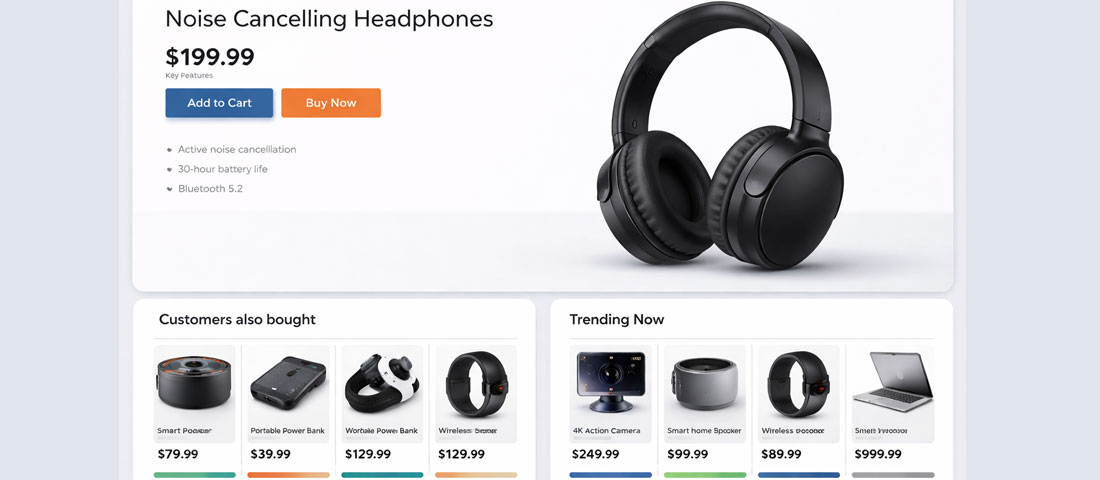
eCommerce design in 2026 is defined by large, high-quality photography, minimal visual clutter, bold typography, and a mobile-first product experience that makes it easy to browse and buy.
Immersive Product Experiences
High-quality product photography remains the single most important conversion factor on a product page. In 2026, leading eCommerce stores are enhancing still photography with: 360-degree product views that let customers rotate and inspect products from every angle; short lifestyle video clips showing products in use; and, for select categories (furniture, fashion, glasses), augmented reality (AR) try-before-you-buy experiences that let customers see how a product looks in their home or on their face through their phone’s camera.
Radical Simplicity in Navigation and Layout
The trend in eCommerce design is toward simplicity — reducing the visual complexity of category pages, simplifying navigation to make products easier to find, and streamlining checkout to reduce the steps between browsing and buying. Heavy sidebars, cluttered promotional banners, and complex filtering interfaces are being replaced by cleaner, more focused product discovery experiences.
Social Proof at Scale
User-generated content (UGC) — customer photos and videos showing real products in real use — is being integrated more prominently into product pages. Review displays have become more sophisticated: video reviews, photo reviews, reviews filtered by customer attribute (height, fit, use case), and aggregate ratings are all being used to give potential buyers the social proof they need to commit to a purchase. Trust signals — number of customers, press mentions, awards, guarantees — are integrated more prominently into the shopping experience.
Mobile-First Checkout Redesigns
Mobile checkout abandonment rates remain significantly higher than desktop — because most mobile checkout experiences are ports of desktop designs rather than genuinely mobile-native experiences. Leading eCommerce stores in 2026 are redesigning checkout specifically for mobile: single-page checkouts, large tap targets, auto-fill for address and payment data, biometric payment (Face ID, fingerprint) support, and one-tap payment through Apple Pay, Google Pay, and Shop Pay. Each friction point removed from mobile checkout measurably improves mobile conversion rates.
Sustainability Communication
Consumer demand for sustainability transparency has moved from a niche preference to a mainstream purchasing consideration in many categories. Leading eCommerce brands in 2026 are integrating sustainability information prominently into the shopping experience: carbon footprint labels on products, sustainable packaging options at checkout, supply chain transparency pages, and third-party certification badges (B Corp, Fair Trade, organic). For brands with genuine sustainability credentials, communicating them effectively is a meaningful conversion driver.
Consumer Behaviour Shifts Every Merchant Must Understand
The research journey has lengthened for high-value purchases. Consumers researching purchases above certain price thresholds are now using AI tools (Perplexity, ChatGPT) in addition to Google, review sites, and social media in their research journey. Appearing well in AI search is increasingly important for consideration-stage visibility in competitive eCommerce categories.
Social proof expectations have risen. The volume and quality of reviews expected before a purchase decision has increased. Products with few reviews, or no reviews, face significantly higher conversion hurdles than they did three years ago. Proactive review generation programmes are now a standard component of eCommerce growth strategy rather than an optional extra.
Payment flexibility is a purchase decision factor. Buy Now, Pay Later (BNPL) options — Klarna, Afterpay, Clearpay, and Sezzle — have moved from checkout novelties to genuine purchasing influencers. For higher-ticket items especially, offering BNPL increases average order value and conversion rates among younger shoppers in particular.
Delivery expectations continue to escalate. Same-day and next-day delivery expectations have spread from Amazon-driven markets to general consumer expectations across most categories. For merchants who cannot compete on delivery speed with large retailers, transparency and reliability are the alternative value proposition — accurate delivery estimates, proactive communication about delays, and easy tracking.
Emerging Technologies: What to Watch in 2027 and Beyond
- AI-generated product descriptions and imagery. AI tools are increasingly capable of generating product descriptions, lifestyle photography, and even product variation images at scale — reducing the content production bottleneck for merchants with large catalogues.
- Conversational commerce. Purchasing through AI assistants and chat interfaces — “Hey Siri, order me more of the coffee I bought last month” — is still nascent but is growing as voice interface and AI assistant capability improves.
- Hyper-personalised dynamic pricing. Real-time price personalisation — showing different prices to different customer segments based on loyalty, location, device, and propensity-to-buy models — is growing in sophistication and adoption.
- Blockchain-based supply chain transparency. QR codes linking to blockchain-verified supply chain records allow consumers to verify authenticity, provenance, and sustainability claims for premium products — growing in luxury goods, food, and sustainable fashion categories.
Action Plan for Merchants at Every Stage
| Stage | Priority Actions for 2026 |
|---|---|
| Just starting out | Choose the right platform (Shopify or WooCommerce), invest in professional product photography, set up abandoned cart email automation from day one, ensure mobile checkout is frictionless |
| Established store (<£1M revenue) | Add AI product recommendations, implement Klaviyo email automation sequences, improve site search, run mobile checkout usability testing, start building review volume systematically |
| Growing store (£1M–£5M revenue) | Implement dynamic personalisation, audit and improve Core Web Vitals, add BNPL payment options, invest in UGC collection, evaluate fulfilment automation to support scaling |
| Scale-up (£5M+ revenue) | Evaluate headless commerce architecture, implement AI-powered dynamic pricing, build subscription and loyalty programme infrastructure, consider international expansion with localised stores |
Frequently Asked Questions About eCommerce Trends in 2026
| What are the biggest eCommerce trends in 2026? | The biggest eCommerce trends in 2026 are: AI-powered personalisation (product recommendations, dynamic pricing, personalised search) becoming accessible to stores of all sizes; operational automation through email sequences, returns portals, and inventory management; mobile-first checkout redesigns that treat the smartphone as the primary purchase device rather than an afterthought; immersive product experiences through 360-degree views and short video; social commerce growth through Instagram, TikTok, and Pinterest shopping; sustainability communication as a mainstream purchasing consideration; and Buy Now Pay Later integration as a conversion-driving payment option. |
| How is AI changing eCommerce in 2026? | AI is changing eCommerce across multiple dimensions in 2026. On the customer-facing side: AI-powered product recommendations show shoppers the most relevant products based on their behaviour; AI site search understands natural language queries; AI chatbots handle the majority of customer service enquiries autonomously; and dynamic pricing adjusts prices in real time based on demand and competitive signals. On the operational side: AI-powered inventory management predicts stock requirements; AI email marketing optimises send times, subject lines, and content personalisation; and AI-generated product descriptions and imagery are reducing content production costs for large catalogues. |
| What eCommerce design trends are dominating 2026? | The dominant eCommerce design trends in 2026 are: immersive product photography and video that gives shoppers confidence in purchase decisions; radical simplicity in navigation and layout that makes finding and buying products easier; prominent, high-quality social proof (customer photos, video reviews, aggregate ratings) integrated throughout the shopping journey; mobile-first checkout that treats smartphone purchasing as the primary use case; and sustainability communication integrated into the product and checkout experience for brands with genuine credentials. The overarching direction is toward cleaner, faster, more focused product experiences that reduce friction and build confidence. |
| Is social commerce important for eCommerce businesses in 2026? | Yes — social commerce (buying directly through social media platforms including Instagram, TikTok, Pinterest, and Facebook) is growing at approximately twice the rate of overall eCommerce and is increasingly important for consumer-facing brands, particularly those targeting audiences under 35. The most effective social commerce strategy integrates product tagging in organic content, shoppable ads in paid social, and influencer partnerships with direct shopping links. For B2C brands with visual products in fashion, beauty, home, food, and lifestyle categories, social commerce is now a primary channel rather than an experimental one. |
| How important is mobile commerce in 2026? | Mobile commerce (mCommerce) accounts for over 60% of global eCommerce transactions in 2026 — making it not just important but the dominant mode of online shopping. Despite this, mobile conversion rates remain significantly lower than desktop conversion rates on most stores — because most eCommerce stores are designed primarily for desktop and adapted for mobile rather than being genuinely designed for the mobile shopping experience. The merchants who are winning in 2026 are those who have made mobile checkout genuinely frictionless: single-page checkout, biometric payment, Apple Pay and Google Pay support, large tap targets, and load times under 2 seconds on mobile connections. |
Want to build or upgrade your eCommerce store with 2026’s best practices?
Neel Networks designs and develops eCommerce stores on Shopify and WooCommerce — building with AI personalisation, mobile-first design, and conversion-focused architecture from day one.