How AI Is Changing Web Development: Tools, Trends & Business Impact in 2026

Web development has never been static. Every few years, a new technology shifts what is possible, who can build for the web, and how fast projects can move. We saw it with content management systems in the early 2000s, with responsive design in the 2010s, and with JavaScript frameworks through the late 2010s and into the 2020s.
What this guide covers
- 1. How AI Is Transforming the Web Development Process Itself
- 2. The Leading AI Coding and Development Tools in 2026
- 3. AI-Powered Features You Can Add to Your Business Website Today
- 4. How Machine Learning Is Revolutionising Website Security
- 5. Intelligent Web Design: What It Means and Where It Is Going
- 6. How to Start Integrating AI Into Your Existing Website
- 7. Frequently Asked Questions About AI in Web Development
- 8. Conclusion: AI Is Not the Future of Web Development — It Is the Present
But nothing in that history compares to the speed and breadth of the change that AI is bringing to web development right now. Artificial intelligence is not just adding a new tool to the developer’s toolkit — it is fundamentally changing the nature of how websites and web applications are built, what they can do, and how they are secured.
For businesses commissioning websites, this transformation creates both exciting opportunities and important questions. What can AI do for your website today? How does AI change what to expect from a web development project? And how do AI-powered features affect your visitors’ experience and your site’s security?
How AI Is Transforming the Web Development Process Itself
AI Coding Assistants: The Developer’s Co-Pilot
The single most impactful change to web development in the past two years is the widespread adoption of AI coding assistants. These tools — integrated directly into developers’ code editors — watch what is being written and suggest completions, generate entire functions from natural language descriptions, identify bugs and suggest fixes, and explain existing code in plain English.
The leading tools include GitHub Copilot (from Microsoft/GitHub), Cursor (an AI-native code editor), Amazon CodeWhisperer, and several others. Research from GitHub found that developers using GitHub Copilot completed coding tasks 55% faster on average than those without it.
For businesses, the practical implication is straightforward: AI-assisted development can deliver projects faster and at lower cost than traditional development approaches — without any reduction in quality when used by skilled developers who review and test the AI-generated code carefully.
AI in Design: From Blank Canvas to Intelligent Suggestions
Design tools like Figma (with its AI plugins), Adobe Firefly, and dedicated AI design platforms can now generate layout suggestions, create colour palette variations based on brand guidelines, resize and adapt design components automatically, and generate custom imagery and iconography. This does not mean AI is replacing designers — good web design still requires strategic thinking, brand understanding, and aesthetic judgement that AI cannot replicate. But the exploratory and iterative phases of design work are significantly faster and more cost-effective than they were two years ago.
AI-Powered Testing and Quality Assurance
AI-powered testing tools can automatically generate test cases, identify edge cases that human testers might miss, run thousands of automated tests simultaneously, and flag visual or functional regressions between code versions. For businesses, this means higher-quality websites at launch — with fewer post-launch bugs — and faster iteration cycles when changes are needed after deployment.
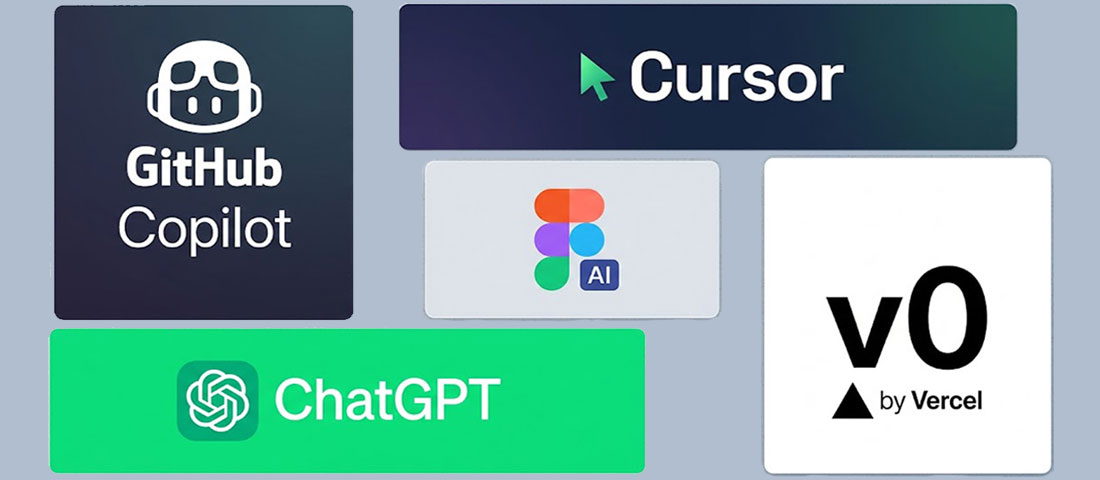
AI coding assistants and design tools are now standard in professional web development workflows.
The Leading AI Coding and Development Tools in 2026
GitHub Copilot
The most widely used AI coding assistant. Integrates directly into VS Code and JetBrains editors. Suggests line completions and whole function blocks in real time. Backed by Microsoft and trained on public GitHub repositories.
Cursor
An AI-native code editor that goes beyond suggestions — it can rewrite entire sections of code based on plain-language instructions, explain complex code, and answer questions about your entire codebase in context.
ChatGPT / Claude
Used extensively for debugging complex logic, architectural discussions, and generating boilerplate code. Particularly useful for explaining error messages, suggesting alternative approaches, and reviewing security vulnerabilities.
Figma AI & Adobe Firefly
AI features built into leading design tools. Figma AI generates UI component variations automatically. Adobe Firefly creates custom imagery and visual assets from text descriptions to match your brand.
Mabl & Testim
AI-powered automated testing platforms that learn from your application’s behaviour and generate and maintain test cases automatically. They flag visual regressions and broken user flows without manual test script maintenance.
v0 by Vercel
Generates complete React UI components from text descriptions or design screenshots. Rapidly becoming a standard tool for prototyping and building front-end interfaces from scratch with minimal manual coding.
AI-Powered Features You Can Add to Your Business Website Today
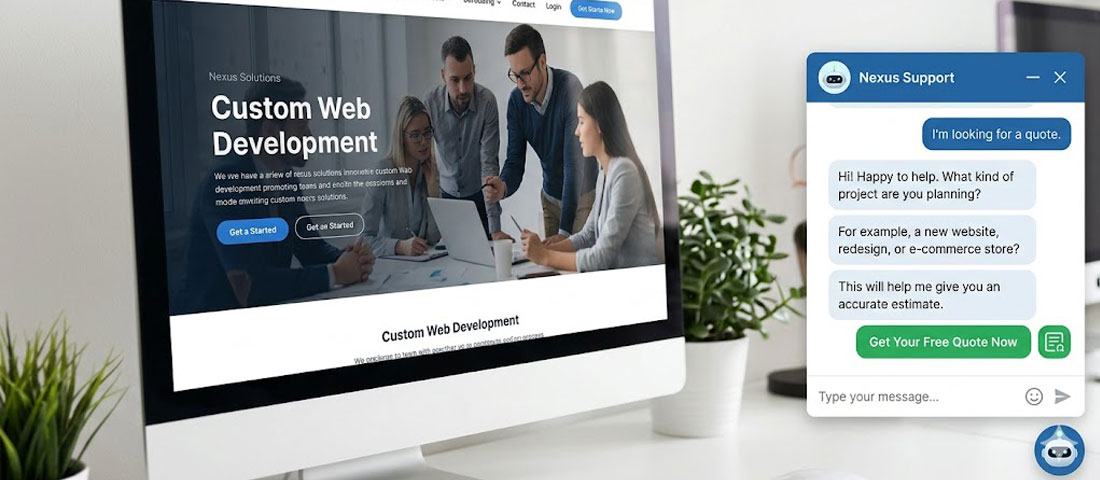
AI-powered chatbots can handle customer queries, qualify leads, and book appointments 24/7 without human intervention.
1. AI-Powered Chatbots and Conversational Interfaces
The most widely adopted AI feature for business websites in 2026 is the AI chatbot — because it delivers measurable, trackable business results. A well-implemented AI chatbot can handle the majority of routine customer queries without human involvement, guide visitors toward relevant products or services, capture lead information at any hour, qualify leads before they reach your sales team, and book appointments or consultations automatically.
Modern AI chatbots use large language models to understand natural language queries, maintain conversation context across multiple exchanges, and provide genuinely helpful, specific responses rather than canned answers. They can be trained on your specific service information, pricing, FAQs, and company policies.
Popular platforms for implementing AI chatbots include Intercom (with AI), Tidio, Freshchat, and Drift. For WordPress websites, dedicated plugins integrate GPT-powered chat interfaces without requiring custom development.
2. AI-Powered Site Search
Most website search functions match exact keywords and return irrelevant results when users search naturally. AI-powered site search understands synonyms, handles misspellings gracefully, interprets the intent behind a query rather than just matching keywords, and learns from search behaviour over time. Studies consistently show that visitors who use site search are two to four times more likely to convert than those who do not. Algolia, Elasticsearch, and Typesense are the leading AI-powered search tools for business websites.
3. Personalisation and Smart Content Delivery
AI-powered personalisation delivers dynamically adjusted content, product recommendations, calls to action, and navigation options based on each visitor’s profile and behaviour. Accessible implementations include: showing different CTAs to first-time versus returning visitors; surfacing blog posts and service pages based on what a visitor has already read; adjusting pricing page messaging based on the visitor’s geography; and recommending products based on browsing history for eCommerce sites.
4. Smart Forms and Lead Qualification
AI can make your contact forms significantly more effective. Smart forms use conditional logic powered by machine learning to show or hide fields based on previous answers — making forms shorter, more relevant, and more likely to be completed. AI lead scoring can evaluate incoming leads in real time and prioritise them for your sales team. Natural language processing can extract key information from free-text form fields, routing enquiries to the right department automatically.
5. Automated Content Optimisation
AI tools can continuously analyse your website’s content performance and suggest optimisations — identifying which pages have high traffic but low engagement, which content is generating leads and which is not, and which calls to action are performing. Tools like Hotjar (with AI analysis) and Google Analytics 4’s AI-powered insights surface actionable recommendations without requiring you to manually analyse complex data.
6. Image Optimisation and Performance
AI-powered image optimisation tools automatically compress, resize, and format images for optimal performance without quality loss — delivering the right image size to each device and connection speed. Solutions like Cloudinary and ShortPixel use machine learning to determine the optimal compression for each image, directly improving page load speed, Core Web Vitals scores, and SEO performance.
How Machine Learning Is Revolutionising Website Security
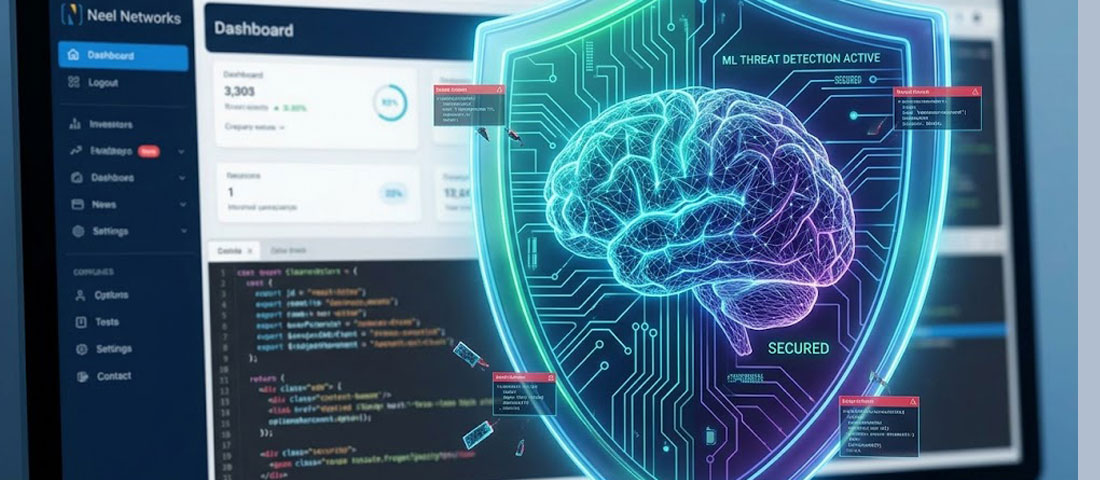
Machine learning allows modern web security systems to detect and block threats in real time — including novel attacks that rule-based systems cannot recognise.
Website security has traditionally worked on a reactive model: security teams identify a new type of attack, write rules to detect and block it, and deploy those rules. This model has a fundamental weakness — it only works against known threats. Machine learning-powered security takes a completely different approach.
Behavioural Anomaly Detection
Instead of looking for known attack signatures, ML security systems learn what normal traffic looks like on your website — typical user behaviour patterns, normal request frequencies, expected geographic distributions, standard session lengths, and usual page interaction patterns. When something deviates significantly from this learned baseline — a sudden traffic spike from unusual sources, a pattern suggesting automated scraping, an unusually high rate of failed login attempts — the system flags and blocks the anomaly in real time.
Advanced Bot Detection and Filtering
ML-powered bot management systems like Cloudflare Bot Management, DataDome, and Imperva use hundreds of behavioural signals simultaneously to distinguish between legitimate humans and malicious bots with high accuracy — looking at mouse movement patterns, typing behaviour, request timing, and browser fingerprinting. This makes them extremely difficult for sophisticated bots to evade.
Real-Time Threat Intelligence
AI security platforms aggregate threat data from millions of websites simultaneously, identifying new attack campaigns as they emerge and deploying defences across all protected sites within minutes. A new malware campaign detected in the USA at 9am can be blocked globally before the same campaign reaches websites in India or Australia.
| Security Capability | Traditional Rule-Based | AI / ML-Powered |
|---|---|---|
| Known threat detection | ✅ Effective | ✅ Effective (+ faster updates) |
| Zero-day / novel attacks | ❌ Misses entirely | ✅ Detects via anomaly patterns |
| Bot vs human distinction | ⚠️ Basic — easily fooled | ✅ Highly accurate, multi-signal |
| False positive rate | ⚠️ High — blocks legitimate users | ✅ Low — learns legitimate patterns |
| Response time to new threats | ❌ Hours to days (manual rule writing) | ✅ Minutes (automated detection + deploy) |
| Monitoring overhead | ❌ High — requires constant human review | ✅ Low — AI handles routine monitoring |
Intelligent Web Design: What It Means and Where It Is Going

Intelligent web design adapts the website experience in real time based on individual user behaviour, intent, and context.
“Intelligent web design” describes a shift in the fundamental model of what a website is — from a static, one-size-fits-all digital brochure to a dynamic, adaptive, learning system that continuously improves itself and personalises the experience for each individual user.
What Intelligent Web Design Looks Like Today
- Dynamic content personalisation: The homepage, navigation, featured services, and CTAs adapt based on the individual visitor’s profile, behaviour history, and stage in the buying journey
- Continuous A/B optimisation: AI systems automatically test variations of key page elements and allocate traffic toward the best-performing variants without requiring manual test setup
- Adaptive navigation: The website’s navigation adapts to show each user the paths and content types most relevant to their apparent intent
- Intelligent search with zero-results handling: When a user searches for something with no exact match, AI suggests related content rather than showing an empty results page
Where Intelligent Web Design Is Heading in the Next Three Years
Multimodal AI interfaces. Websites will increasingly incorporate AI assistants that accept voice, image, and text input simultaneously — allowing visitors to describe what they are looking for using natural conversation, or upload reference images for product searches.
Generative UI components. AI systems will begin generating custom interface components for individual users in real time — not choosing from predefined templates, but dynamically creating UI elements tailored to the specific user and context.
AI-driven accessibility. AI tools are beginning to automate accessibility auditing, remediation, and real-time adaptation of interfaces for individual users’ accessibility needs — making genuinely accessible web experiences significantly more achievable.
How to Start Integrating AI Into Your Existing Website
-
Start with an AI chatbot
This is the single highest-ROI first step for most businesses. Choose a platform like Tidio, Intercom, or Freshchat. Train it on your key service information, FAQs, pricing overview, and contact options. A well-configured chatbot can capture leads 24/7 and handle routine enquiries without your team’s involvement within two to four weeks of setup. -
Upgrade your site search
If your website has more than 50 pages of content, products, or blog posts, AI-powered search is a high-impact improvement. Evaluate Algolia or Typesense — both offer accessible pricing for small to medium business websites. Better search directly reduces bounce rate and increases time visitors spend engaging with your content. -
Implement AI-powered image optimisation
Add a tool like Cloudinary or ShortPixel (which uses AI for compression) to your website workflow. This requires minimal ongoing effort and directly improves page load speed, Core Web Vitals scores, and mobile experience — all of which affect SEO rankings. -
Enable AI analytics insights
If you are using Google Analytics 4, enable and regularly review the AI-powered insights and anomaly detection features. These surface significant changes in your traffic patterns automatically — identifying drops or spikes that require investigation without you manually monitoring every metric. -
Review and upgrade your security layer
Consider upgrading to a Cloudflare Pro or Business plan (which includes ML-powered bot management and DDoS protection). For WordPress websites specifically, review your current security plugin against AI-enhanced alternatives like Wordfence Premium or Cloudflare WAF. -
Explore personalisation for your highest-traffic pages
Start with the simplest possible personalisation: showing different CTAs to first-time versus returning visitors, or adjusting your homepage headline based on the traffic source (ad campaign versus organic search versus social media).
A practical priority note: Do not try to implement everything at once. The most common mistake businesses make is starting multiple AI initiatives simultaneously and doing none of them well. Pick the single highest-impact first step for your specific business — usually the AI chatbot — implement it properly, measure the results, and then move to the next priority.
The bottom line for business owners: AI is not a future possibility for your website — it is a present reality. The businesses adding AI chatbots, intelligent search, ML-powered security, and AI-assisted development to their web projects in 2026 are delivering better user experiences, capturing more leads, and protecting their sites more effectively than those still relying on traditional-only approaches. The barrier to entry is lower than most businesses realise.
Frequently Asked Questions About AI in Web Development
| How is AI changing web development in 2026? | AI is changing web development in several fundamental ways. AI coding assistants like GitHub Copilot and Cursor allow developers to write code significantly faster, generating boilerplate and writing functions from natural language descriptions. AI design tools generate layout options and component suggestions. Machine learning is powering advanced website security through real-time threat detection and bot filtering. And AI-driven personalisation engines allow websites to deliver individualised experiences to each visitor — making web development faster, smarter, and more powerful than ever before. |
| What AI features can I add to my business website right now? | Practical AI features you can add right now include: an AI-powered chatbot for 24/7 customer support and lead capture; AI-driven search that understands natural language queries; personalised product or content recommendations based on visitor behaviour; smart contact forms with conditional logic and automated lead qualification; and AI-powered live chat with escalation to human agents. Many of these can be integrated through third-party services or plugins without requiring custom development. |
| How does AI improve website security? | AI and machine learning improve website security in ways that traditional rule-based systems cannot match. AI security systems detect anomalous traffic patterns in real time — identifying DDoS attacks, credential stuffing attempts, and bot activity based on behavioural patterns rather than known threat signatures. This means they can catch zero-day attacks and novel threat vectors that signature-based systems would miss entirely. Machine learning models also distinguish between legitimate human users and malicious bots with high accuracy, reducing false positives that block genuine visitors. |
| Will AI replace web developers? | AI will not replace skilled web developers — but it will significantly change what web developers spend their time doing. AI coding assistants already handle a large proportion of repetitive, boilerplate coding tasks, freeing developers to focus on complex problem-solving, architecture decisions, and client communication. Developers who learn to work effectively with AI tools are becoming dramatically more productive. The demand for skilled human web developers who can architect complex systems, ensure quality and security, and translate business requirements into effective technical solutions remains strong and is not being replaced by AI. |
| What is intelligent web design? | Intelligent web design refers to the use of AI and machine learning to create websites that adapt, learn, and personalise in response to user behaviour and preferences — rather than delivering a static, identical experience to every visitor. An intelligently designed website might show different content to a first-time visitor versus a returning customer, surface different product recommendations based on browsing history, adjust its navigation based on the user’s apparent intent, and continuously improve its conversion performance through automated A/B testing. |
| Does adding AI features to my website improve SEO? | Adding AI features to your website can improve SEO both directly and indirectly. Directly: AI-powered search and personalisation improve user engagement metrics — time on site, pages per session, and bounce rate — which are factors Google considers in its quality assessment. AI security tools reduce downtime and protect site performance. Indirectly: demonstrating innovative use of technology often attracts media coverage, backlinks, and social shares that strengthen domain authority. Website performance improvements driven by AI monitoring directly impact Core Web Vitals scores and SEO rankings. |
| How much does it cost to add AI features to a website? | The cost varies significantly depending on the type of feature and how it is implemented. AI-powered chatbots can be added through third-party services starting from a few thousand rupees per month for basic plans. AI search functionality, recommendation widgets, and automated personalisation tools are often available as plugins or SaaS integrations at relatively low monthly costs. Custom AI feature development — building bespoke recommendation engines or advanced automation workflows — requires more investment. At Neel Networks, we work with businesses at every budget level, starting with the AI features that deliver the strongest return on investment for your specific business model. |
Conclusion: AI Is Not the Future of Web Development — It Is the Present
The narrative around AI in web development often positions it as something that is coming — a future state to prepare for. The reality in 2026 is that AI has already arrived. Faster, more cost-effective development. Smarter, more personalised visitor experiences. More robust, intelligent security. These benefits are being delivered for businesses right now, by web development teams that have embraced AI as a core part of their practice.
At Neel Networks, we have integrated AI tools throughout our web development workflow and into the websites we build for clients. Whether you are planning a new website, considering a major redesign, or looking to add specific AI capabilities to your existing site, our team can help you identify the right approach and deliver it effectively.
Want to discuss how AI can improve your website?
Talk to the Neel Networks team — web design and development specialists with 12+ years of experience, now integrating AI capabilities into every project we deliver.