Google’s First Page Is Getting Crowded. AI SEO Could Be Your Next Opportunity
Something has changed about the Google results page, and most businesses can feel it before they can measure it. Rankings hold steady but traffic slips. Impressions climb while clicks flatten. The position-three listing that used to bring in a reliable flow of enquiries now sits below an AI-generated answer, a block of sponsored results, a local pack, a video carousel and a set of related questions — and by the time a searcher reaches it, many of them have already found what they needed without leaving Google at all. This is not a ranking problem, and no amount of conventional optimisation fixes it. It is a real-estate problem, and it requires a different response.
That response is what the industry has started calling AI SEO — optimising to be the source that AI-powered search experiences cite, quote and recommend, rather than only optimising for a blue link position that is being pushed steadily down the page. This article sets out what the data actually shows about the squeeze on organic clicks, which claims about it are overstated, and what a business can practically do about it. For the full technical breakdown of the disciplines involved, our complete AI search optimisation guide covers AEO, GEO, AIO and LLMO in depth. Here the focus is narrower: what is happening to the first page, what the opportunity looks like, and whether it is worth your attention right now.
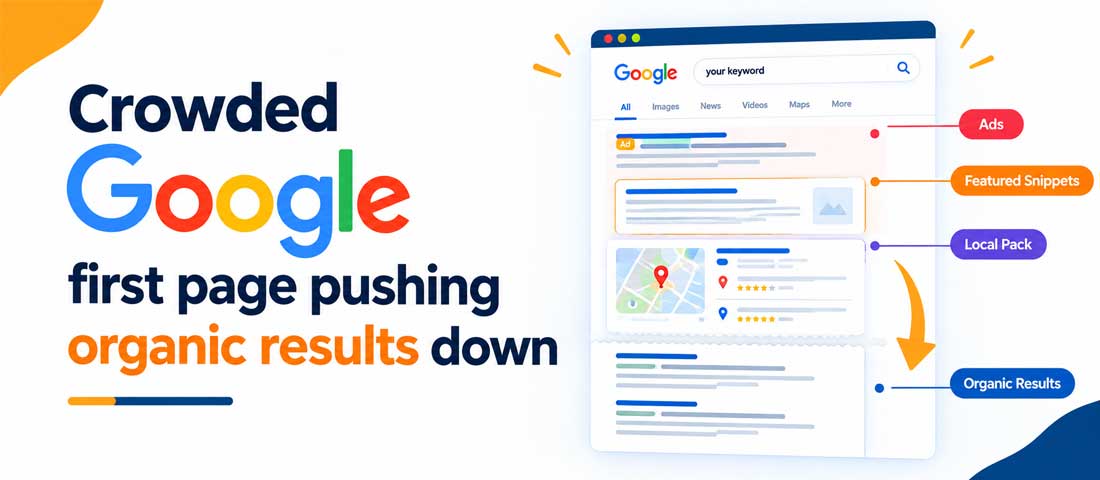
What actually happened to the first page
The change was gradual enough that many businesses never registered it as a single event. Ten years ago a Google results page was ten organic listings with a few ads above them. Today the same query can return an AI Overview occupying the top of the screen, four sponsored results, a local map pack, a “People also ask” block, a video carousel, a shopping module, a featured snippet, and related searches — with the first genuinely organic listing appearing well below the fold on a laptop and considerably further down on a phone.
The AI Overview is the most consequential addition because of where it sits. Research into its behaviour found that AI Overviews appeared on roughly 42% of queries studied, and when they appeared, they occupied the top of the page around 85% of the time. That positioning matters enormously — the same research found that removing a top-positioned AI Overview nearly doubled outbound clicks, while removing one lower down the page had no measurable effect at all.
It is worth being precise about what this is and is not. Your rankings have not necessarily fallen. Your content has not necessarily got worse. What has changed is how much of the visible page your ranking actually earns you, and how often a searcher’s question is answered before they ever reach it. A business that has been optimising diligently for years can watch its traffic decline while every ranking report it receives looks healthy, which is a genuinely disorienting experience and one we hear described by clients regularly.
The numbers, stated honestly
There is a lot of alarmist reporting in this area, and a lot of vendor content with an interest in making the picture look as dire as possible. The actual data is serious but more nuanced than the headlines.
The click suppression is real and substantial. Ahrefs, analysing 300,000 keywords as of December 2025, found that the presence of an AI Overview correlated with a 58% lower click-through rate for the top-ranking page. Seer Interactive, tracking billions of impressions across dozens of brands, measured organic CTR on AI Overview queries falling from 1.76% to 0.61% between June 2024 and September 2025. Pew Research, studying nearly 69,000 real searches, found users clicked a traditional result 8% of the time when an AI Overview was present, against 15% when it was not.
A randomised experiment confirmed causation, not just correlation. Most of the early evidence was correlational — AI Overviews appear on certain kinds of query, and those queries might have had lower click rates anyway. A field experiment running in early 2026 randomly assigned users to see or not see AI Overviews and found a 38% reduction in outbound organic clicks on triggered queries, with zero-click searches rising from 54% to 72%. Notably, over 95% of the group with AI Overviews hidden did not notice anything had changed.
But the trend reversed in early 2026, and this is the part most coverage misses. Seer Interactive’s continued tracking found that after bottoming out at 1.3% in December 2025, click-through rate on AI Overview queries climbed to 2.4% by February 2026 — an 85% recovery in two months. At the same time, queries without AI Overviews became more valuable, with CTR rising from 2.8% in early 2025 to 3.8% by February 2026. The interpretation offered is that AI Overviews absorb the quick-answer queries, and the people who still click through are the ones with genuine intent.
The structural gap remains, though. Even with the rebound, the picture is uneven. Seer’s data showed queries without an AI Overview generating around 33,500 clicks per million impressions, brands cited within an AI Overview receiving 20,743, and brands not cited receiving only 9,445 — under a third of the no-AI-Overview figure.
That last statistic is the entire argument of this article compressed into one line. Being cited in the AI Overview is worth roughly twice as much as appearing on the same page without being cited. The gap between cited and uncited is now larger than the gap between ranking well and ranking poorly used to be.
The finding that reframes everything
If you read one thing in this article, make it this section.
When AI Overviews first appeared, the sources they cited came overwhelmingly from the conventional top of the organic results — if you ranked in the top ten, you had a strong chance of being quoted. Analysis tracking citation overlap found that around 76% of AI Overview citations came from pages ranking in the organic top 10 in mid-2024. By February 2026, that figure had fallen to somewhere between 17% and 38% depending on the methodology used.
Read that again, because the implication is significant in both directions.
If you currently rank well, your position no longer protects you. The correlation between ranking and being cited has weakened substantially. A number-two ranking that used to more or less guarantee inclusion in the AI answer now guarantees very little. This is why so many businesses see stable rankings and falling traffic simultaneously — the ranking is intact, the citation has gone elsewhere.
If you do not currently rank well, a route has opened that did not exist before. This is the opportunity in the title, and it is real. AI systems selecting sources are not simply reading off the rankings. They are assessing whether a page answers a specific question clearly, whether the claims are attributable, whether the information is structured in a way a model can extract confidently, and whether the brand appears credible across the wider web. A smaller business that answers a question genuinely well can now be cited above a larger competitor that outranks it — something that was close to impossible in the traditional model, where domain authority compounded into a near-permanent advantage.
For the first time in roughly fifteen years, the thing being optimised for has changed enough that incumbent advantage has been partially reset. That does not last forever. It is worth acting on while it does.
Traditional SEO and AI SEO compared
These are related disciplines with real overlap, but the differences in what each optimises for are substantial enough to change how you’d allocate effort.
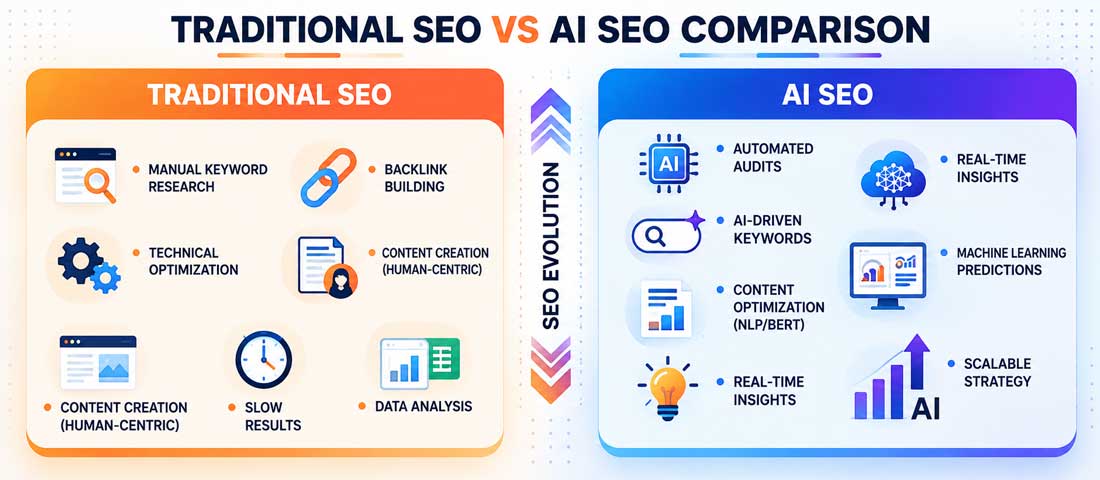
| Factor | Traditional SEO | AI SEO |
|---|---|---|
| What you’re optimising for | A ranked position on a results page | Being cited, quoted or recommended in an answer |
| Primary success signal | Position, clicks, sessions | Citation frequency, share of voice in answers |
| Content that wins | Comprehensive pages targeting a keyword | Clearly-answered specific questions, extractable claims |
| Authority signals | Backlinks, domain authority | Brand mentions across the web, consistency, citability |
| Technical requirement | Crawlable, fast, indexed | Server-rendered HTML, structured data, clean extraction |
| Traffic volume produced | High | Low — around 1% of total for most sites today |
| Traffic quality produced | Baseline | Substantially higher conversion and engagement |
| Measurement maturity | Mature, well-tooled | Immature, heavily under-attributed |
| Incumbent advantage | Strong and compounding | Partially reset — newer entrants can compete |
The row worth dwelling on is the traffic volume one, because it is where honest assessment matters most. Referral traffic from AI assistants is still a small fraction of total traffic for nearly every business — Conductor’s cross-industry measurement put it at around 1.08%. Anyone telling you to redirect your entire budget away from conventional search toward AI visibility is overselling. The correct read is that this is a small channel growing quickly, with unusually high quality, that almost nobody is optimising for yet.
The traffic quality trade
The volume is small. The quality is not, and this is what makes the channel worth building for despite its size.
Multiple independent studies published across 2025 and 2026 found AI referral traffic converting at roughly four to five times the rate of standard organic search on a cross-industry basis. The range underneath that average is wide — from around 1.3x in low-consideration eCommerce to considerably higher in B2B and professional services, where one analysis of 312 B2B firms found a 14.2% conversion rate for AI referrals against 2.8% for Google organic. Engagement follows the same pattern, with AI-referred visitors reported spending meaningfully longer on site than organic visitors.
The mechanism is straightforward once you think about it from the searcher’s side. Someone arriving from a conventional search result has clicked a link that looked plausibly relevant and is now assessing whether it actually is. Someone arriving from an AI citation has already read a synthesised answer, seen your business named as a source for it, and clicked deliberately to verify or go deeper. They are pre-qualified in a way organic visitors generally are not.
Two honest caveats. First, average order value from AI-referred traffic has in some studies come in below organic, so businesses measuring revenue per session rather than conversion rate alone should check both. Second, the conversion figures circulating in this space vary enormously between studies, and the highest numbers tend to come from individual company case studies rather than aggregate measurement. Treat four to five times as the realistic planning assumption and anything above ten times as an outlier rather than a target.
Who is affected most
AI Overview coverage is strikingly uneven across sectors, and the variation should directly shape how urgently you respond.
Tracking of AI Overview presence across industries between early 2025 and early 2026 found healthcare queries triggering AI Overviews around 88% of the time, education 83%, B2B technology 82%, and restaurants 78% — while eCommerce sat at roughly 4%.
If you are in a high-coverage sector — healthcare, education, B2B technology, professional services, finance, legal, anything where people search for explanation and guidance — the squeeze is already affecting you and AI SEO is not a forward-looking investment but a current necessity. Informational and educational content has taken the heaviest click losses across every study.
If you are in eCommerce or another transactional category, the immediate pressure is lower, though AI Overview coverage of shopping queries has been expanding quickly. The more relevant shift for retail is the growth of AI-assisted product research happening before anyone reaches a search engine at all.
One counterintuitive finding worth knowing: branded queries with AI Overviews have in some datasets actually gained clicks, while informational queries lost them. If people search for you by name, AI Overviews may be helping rather than hurting. The damage concentrates in the top-of-funnel informational content that most businesses rely on to be discovered by people who don’t yet know they exist.
The seven-step AI SEO framework
What follows is the practical sequence. None of it requires abandoning conventional SEO — most of it strengthens both at once.
-
Make sure your content is actually readable by AI crawlers
This is the foundation and the most common silent failure. AI crawlers largely do not execute JavaScript the way Google’s renderer does. If your content is client-side rendered — a React single-page application, a site that builds its content in the browser — it may be effectively invisible to the systems you are trying to be cited by. Check what a crawler actually receives by viewing the raw page source rather than the rendered page. If the substance of your content is not in the HTML that arrives from the server, nothing else on this list matters until it is. -
Restructure content around specific answerable questions
A 4,000-word guide that covers a topic comprehensively but never states a direct answer to any single question is hard to cite. The same content organised into clear question-shaped sections, each with a direct answer in the first sentence or two followed by supporting detail, is straightforward to extract. This is not about writing shorter — it is about making sure that somewhere in each section there is a clean, quotable statement that stands on its own. -
Implement structured data properly
Schema markup — Article, FAQ, HowTo, Product, Organisation, LocalBusiness as appropriate — gives machines an unambiguous reading of what your page contains. Conventional SEO has treated this as a nice-to-have that occasionally earns a rich result. For AI SEO it is closer to essential, because it removes interpretation from the extraction process. The technical foundations here overlap heavily with conventional practice, covered in our on-page and technical SEO guide. -
Build citability into how you write
AI systems favour claims that can be attributed. Specific figures beat vague quantities. Named sources beat unattributed assertions. Dated statements beat timeless vagueness. Original data — your own numbers, your own research, your own documented experience — is the strongest material of all, because it exists nowhere else and cannot be synthesised from other sources. A business that publishes something genuinely proprietary gives AI systems a reason to name it specifically rather than blending it into a generic answer. -
Work on brand presence beyond your own website
Analysis in this area has found brand mentions correlating more strongly with AI citations than backlinks do. AI systems build a picture of your credibility from how your business appears across the wider web — industry publications, directories, forums, review sites, community discussions, and particularly platforms like Reddit and YouTube, which appear disproportionately often as citation sources. Consistency matters: the same business description, the same claims, the same positioning wherever you appear. -
Set up measurement before you need it
AI referral traffic is heavily misattributed by default — one analysis suggested around 70% of it lands in GA4 as “Direct”. Create a custom channel group filtering referrals from the major AI assistants so you can see the channel separately. Begin tracking whether your brand appears in AI answers to your key questions, even if only by checking manually each month. You cannot demonstrate progress on something you were not measuring before you started. -
Keep doing conventional SEO
This is not a replacement strategy. Queries without AI Overviews have become more valuable, not less, with click-through rates rising as the quick-answer queries drain away. Branded searches are gaining. Transactional queries are still largely conventional. The businesses getting this right are running both disciplines together, because the technical foundations, content quality and authority signals substantially overlap — which is how we structure SEO engagements rather than treating AI visibility as a separate product.
Want to Know Whether AI Search can Actually See Your Site?
We run AI visibility audits that check what crawlers actually receive from your pages, whether your content is structured to be citable, and where your brand currently appears in AI-generated answers for the questions that matter to your business. It is usually the fastest way to find out whether you have a content problem, a technical problem, or no problem at all.
The Google Ads question
A fair amount of the interest in AI SEO comes from businesses watching paid search get more expensive and looking for alternatives. The comparison deserves an honest treatment rather than a convenient one.
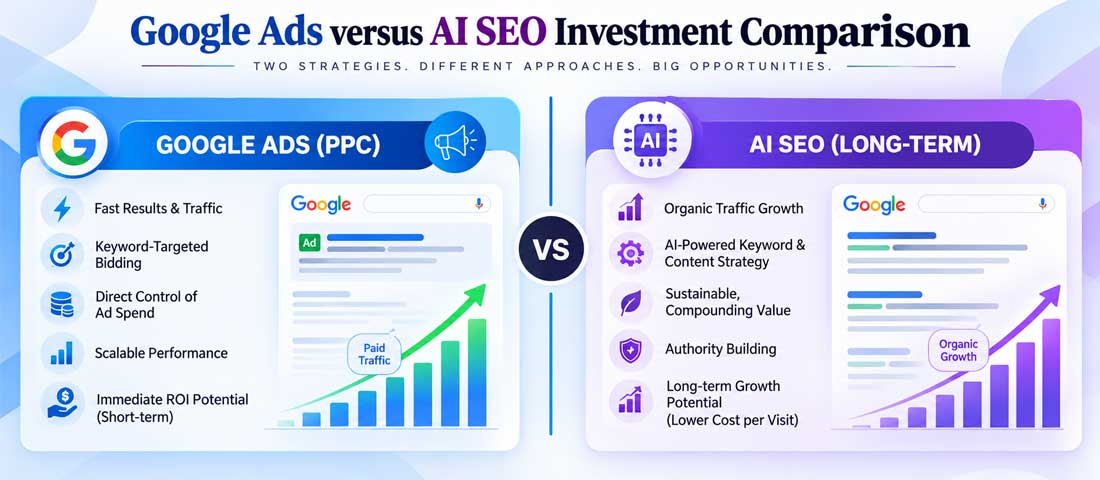
The squeeze affects paid results too. Seer’s data found paid click-through rates falling alongside organic when AI Overviews were present — from 19.7% to 6.34% in one measurement period. The AI Overview pushes sponsored results down the page just as it pushes organic ones down. Shifting budget from organic to paid does not escape the problem.
The fundamental difference is ownership. Paid search visibility stops the day you stop paying for it. Citation-worthy content continues to earn visibility after the work is done. Neither is strictly better — paid search delivers immediate, controllable, precisely-targeted traffic in a way that no organic approach can match, and businesses that need volume next week should be buying it rather than writing content.
The honest position is that AI SEO is not a substitute for Google Ads and should not be sold as one. It is a way to reduce total dependence on paid acquisition over time, to capture a high-converting channel that most competitors are ignoring, and to build an asset that continues working rather than an expense that resets monthly. Businesses that treat it as a replacement for paid search tend to be disappointed within a quarter. Businesses that treat it as a parallel investment with a longer payback tend to be pleased within a year.
The measurement problem nobody has solved
Being upfront about this matters, because any agency promising precise AI visibility reporting is overstating what the tooling currently supports.
Attribution is genuinely broken. A large share of AI referral traffic arrives without a referrer header and lands in analytics as direct traffic. Unless you have specifically configured a custom channel group, you are almost certainly under-counting this channel substantially — possibly by a factor of three.
Citations are not reported to you. There is no Search Console equivalent telling you which AI answers cited your site, how often, or for which queries. A growing set of third-party tools sample AI responses at intervals and report on brand presence, which is useful directionally but is sampling rather than measurement.
Answers are not deterministic. The same question asked twice can produce different sources. This makes rank-tracking-style precision impossible and means AI visibility is better understood as a probability of being cited than as a position you hold.
What to measure instead. Track AI referral sessions as a distinct channel and watch the trend rather than the absolute number. Monitor conversion rate from that channel against organic. Manually check a fixed set of your most important questions across the major assistants each month and record whether you appear. Watch branded search volume, since AI discovery often produces a branded search afterwards rather than a direct click. None of this is as clean as conventional SEO reporting, and pretending otherwise would be dishonest.
What to do in the next ninety days
For a business that has read this far and wants a practical starting point rather than a strategy document.
Weeks one to two — find out where you stand. Check whether your content is server-rendered and visible in raw page source. Set up a custom channel group in analytics for AI referrals. Pick your fifteen most commercially important questions and manually check whether you appear in answers from the major assistants. Record the baseline.
Weeks three to six — fix the technical foundation. Resolve any rendering issues that prevent crawlers reading your content. Implement or correct structured data on your most important pages. Make sure your organisation details are consistent and machine-readable. This is unglamorous and it is the part that most often turns out to be the actual blocker.
Weeks seven to twelve — restructure your best content. Take the ten pages that matter most commercially and rework them around specific answerable questions with direct answers. Add original data where you have it. Tighten vague claims into specific attributable ones. Do not rewrite your whole library — prove the approach on a small set first and measure what happens.
Ongoing — build presence beyond your site. Industry publications, relevant communities, review platforms, and consistent brand information wherever you appear. This compounds slowly and is the hardest part to shortcut.
Ninety days is enough to know whether the approach is working for your business. It is not enough to see the full effect, which typically takes six to twelve months as content is recrawled and brand signals accumulate.
Common mistakes in responding to the squeeze
- Panicking and abandoning conventional SEO. Queries without AI Overviews have become more valuable, not less. Branded search is gaining. Transactional intent is still largely conventional. Walking away from this is walking away from the majority of your traffic.
- Assuming a good ranking still guarantees citation. The share of AI Overview citations coming from top-ten organic pages has fallen sharply. Ranking and being cited have become substantially different achievements.
- Building a site that AI crawlers cannot read. Client-side rendered content is close to invisible to systems that do not execute JavaScript. This is the single most consequential technical decision affecting AI visibility, and it is made at build time rather than fixed afterwards.
- Expecting AI referral volume to replace organic volume. It is currently around 1% of total traffic for most sites. The case for investing rests on quality and trajectory, not on present volume.
- Buying an AI visibility tool before fixing the content. Tools report on whether you are cited. They do not make thin content worth citing.
- Not separating AI traffic in analytics. Most of it is being logged as direct. You cannot manage a channel you cannot see.
- Writing for machines at the expense of people. Content stuffed with question headings and no substance reads badly to humans and gets cited no more often for it. The systems are trained to identify genuinely useful answers.
- Treating it as purely a content exercise. Brand mentions across the wider web correlate strongly with citation. A site optimised in isolation, with no presence anywhere else, has a harder time being selected as a source.
- Chasing the outlier statistics. Conversion rates of twenty-three times organic exist in individual case studies. Plan on four to five and treat anything beyond as upside.
- Ignoring how this interacts with everything else you’re building. AI visibility affects and is affected by content strategy, technical architecture and conversion design together, which is why it sits alongside our wider work on how AI is transforming SEO and the future of search rather than standing apart from it.
Where this is heading
Some honest speculation, clearly labelled as such, because businesses making investment decisions deserve a view rather than a shrug.
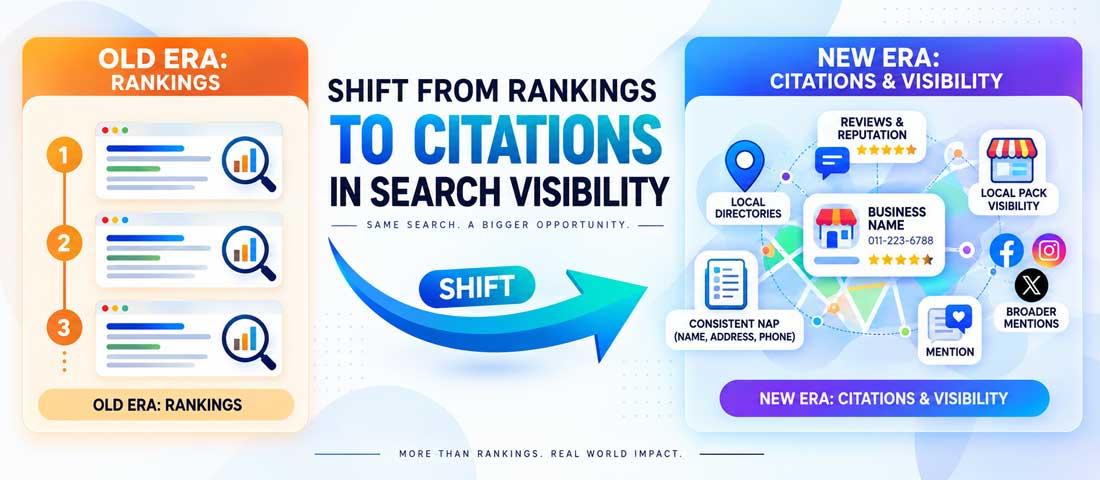
The squeeze is unlikely to reverse. Google has strong commercial incentive to keep users on its properties, and AI Overviews serve that directly. The early-2026 click-through recovery is encouraging but looks more like an equilibrium forming than a retreat.
Discovery is fragmenting across more surfaces. ChatGPT still dominates measurable AI referrals but its share has been falling as Gemini, Claude and Perplexity take ground. Optimising for one assistant specifically is a poor bet; optimising to be a clear, credible, well-structured source works across all of them because they are broadly assessing the same things.
The current window is a genuine window. Surveys consistently find only a small minority of marketers actively tracking AI visibility, let alone optimising for it. That gap is the opportunity, and it will close as the practice becomes standard. The businesses that build citation-worthy content and clean technical foundations now will be established sources by the time their competitors start.
The fundamentals are likely to keep mattering. Every iteration of search so far has eventually rewarded genuinely useful, clearly-expressed, credible content. There is no obvious reason for AI-mediated search to break that pattern, and a good deal of reason to think it strengthens it — a model selecting a source has no interest in keyword density and every interest in whether the page answers the question.
When to bring in help
Much of the ninety-day plan above is achievable internally by a team that takes it seriously. Some situations benefit from outside input.
Get help when the technical diagnosis is beyond your team — determining whether crawlers can actually read your content, and fixing it if they cannot, is a development question rather than a marketing one. Get help when you have watched traffic decline for several quarters without a clear explanation, since distinguishing an AI Overview squeeze from an algorithm update or a technical regression requires looking at several data sources together. Get help when your site is built on an architecture that may be structurally invisible to AI crawlers, because that is a build-level decision with consequences across everything else. And get help when you need to make a budget case internally, since the measurement immaturity in this area makes it genuinely difficult to build a defensible business case without someone who has done it before.
For businesses approaching this as part of a broader modernisation rather than a standalone tactic, the interaction between site architecture, content structure and AI visibility is where the real leverage sits — which is how we structure AI search optimisation engagements, and why it frequently overlaps with the underlying custom website development when the architecture itself is the constraint.
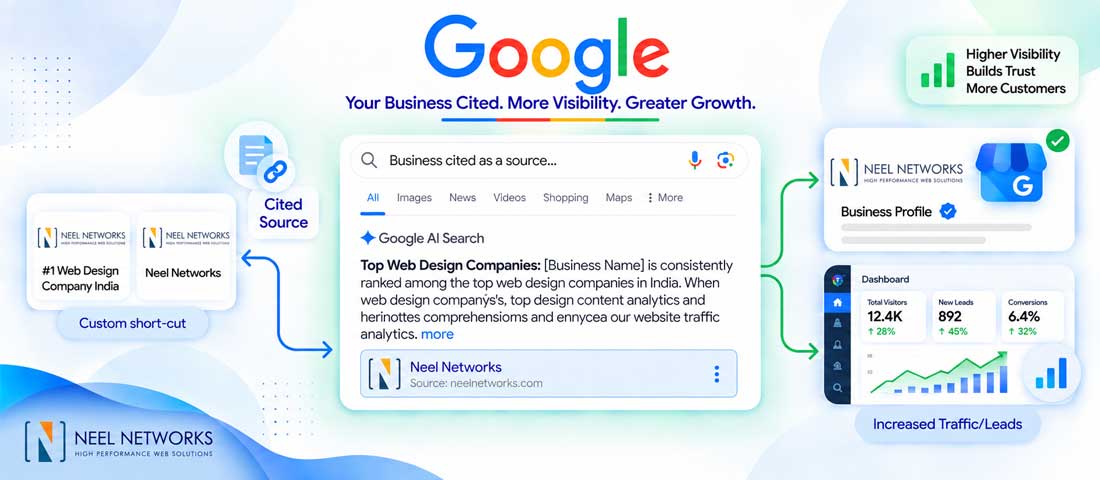
The honest summary is that Google’s first page has become genuinely crowded, the effect on organic clicks is real and measurable, and conventional optimisation alone no longer produces the visibility it once did. AI Overviews reduce click-through on the queries they appear on by somewhere between roughly 38% and 58% depending on the study and methodology, they appear on a substantial share of queries and sit at the top of the page most of the time they do, and zero-click searching has risen sharply as a result. But the picture is not uniformly bleak — click-through rates began recovering in early 2026, queries without AI Overviews became more valuable, and branded searches have in some datasets gained rather than lost. The genuine opportunity sits in a single finding: the proportion of AI Overview citations drawn from top-ten organic pages has collapsed from around three-quarters to well under half, which means ranking and being cited have come apart. That is bad news for incumbents whose position used to guarantee inclusion, and it is an opening for everyone else. AI referral traffic remains small — roughly 1% of total for most businesses — but converts at something like four to five times organic, is growing quickly, and is being actively optimised for by only a small minority of businesses. The work required is not exotic: make sure crawlers can read your content, structure it around specific answerable questions, make your claims attributable, implement structured data properly, build brand presence beyond your own site, and set up measurement before you need it. None of that replaces conventional SEO, and it should not be sold as an escape from paid search. It is a parallel investment in a channel that is small today, high quality now, and very likely larger tomorrow — and the window in which most of your competitors are ignoring it is the reason to move on it this quarter rather than next year.
Frequently asked questions
| How much traffic are AI Overviews actually taking? | The measured impact varies by study and methodology but is consistently substantial. Ahrefs found a 58% lower click-through rate for the top-ranking page when an AI Overview was present, analysing 300,000 keywords as of December 2025. A randomised field experiment in early 2026 measured a 38% reduction in outbound organic clicks on triggered queries, with zero-click searches rising from 54% to 72%. Pew Research found users clicking a traditional result 8% of the time with an AI Overview present against 15% without. Seer Interactive tracked organic CTR on AI Overview queries falling from 1.76% to 0.61% between June 2024 and September 2025. Importantly, that trend partially reversed in early 2026, with CTR recovering to around 2.4% by February. The effect also varies enormously by sector — healthcare queries trigger AI Overviews around 88% of the time while eCommerce sits at roughly 4%. |
| Is traditional SEO dead? | No, and treating it as dead is one of the more expensive overreactions available. Queries without AI Overviews have actually become more valuable — Seer measured click-through on those queries rising from 2.8% in early 2025 to 3.8% by February 2026, apparently because AI Overviews absorb the quick-answer searches and the people who still click through have genuine intent. Branded searches with AI Overviews have gained clicks in some datasets rather than losing them. Transactional and commercial queries remain largely conventional. What has changed is that rankings alone no longer deliver the visibility they used to for informational content, and that being cited within an AI answer has become worth roughly twice as much as appearing on the same page uncited. The right response is to run both disciplines together, not to abandon one for the other. |
| What exactly is AI SEO? | It is the practice of optimising to be cited, quoted and recommended by AI-powered search experiences rather than only ranking in traditional results. It goes by several overlapping names — Answer Engine Optimisation, Generative Engine Optimisation, AI Optimisation, Large Language Model Optimisation — which describe broadly the same work from slightly different angles. In practice it involves making sure your content is technically readable by crawlers that do not execute JavaScript, structuring content around specific answerable questions with direct extractable answers, implementing structured data so machines can interpret your pages unambiguously, making claims specific and attributable rather than vague, and building brand presence across the wider web since brand mentions correlate strongly with citation. Much of it overlaps with doing conventional SEO properly, which is why it is better understood as an extension of good practice than as a separate discipline. |
| How do I know if my site is visible to AI search? | Start with three checks. First, view your raw page source rather than the rendered page and confirm your actual content is present in the HTML the server sends — if your site builds its content in the browser through JavaScript, AI crawlers may see almost nothing. Second, set up a custom channel group in your analytics filtering referrals from the major AI assistants, since a large share of this traffic otherwise lands as “direct” and goes uncounted; one analysis suggested around 70% is misattributed by default. Third, take the fifteen questions most commercially important to your business and manually ask them across the major AI assistants, recording whether you appear as a source. That manual check is crude but it is currently the most reliable signal available, since there is no Search Console equivalent reporting AI citations and answers are not deterministic — the same question can produce different sources on different occasions. |
| Does AI SEO replace Google Ads? | No, and anyone selling it that way is overstating the case. Paid search delivers immediate, controllable, precisely-targeted traffic in a way no organic approach matches — if you need volume next week, buy it. What AI SEO offers is a way to reduce total dependence on paid acquisition over time and to capture a channel most competitors are currently ignoring. It is also worth knowing that AI Overviews squeeze paid results too, not just organic; Seer measured paid click-through falling from 19.7% to 6.34% in one period when AI Overviews were present. Shifting budget from organic to paid does not escape the problem. The realistic framing is that paid search is rented visibility that stops when payment stops, while citation-worthy content is an asset that keeps working after the investment is made. Most businesses should be doing both, with the balance depending on how urgently they need volume. |
| How long does AI SEO take to show results? | Ninety days is usually enough to know whether the approach is working; six to twelve months is realistic for the full effect. The sequence that produces the fastest signal is to fix technical readability first — if crawlers cannot read your content, nothing else matters and this is frequently the actual blocker — then restructure your ten most commercially important pages around specific answerable questions, then measure what happens before rolling the approach out further. Technical fixes can show results within weeks of recrawling. Content restructuring typically takes one to three months to be reflected in AI answers. Brand presence across the wider web compounds slowly and is the hardest element to accelerate. One caution: because AI answers are not deterministic and citation is not reported to you, progress is harder to demonstrate than conventional ranking improvement, so establish your baseline before starting rather than trying to reconstruct it afterwards. |
| Is it worth it if AI referral traffic is only 1% of visits? | That depends on your sector and your time horizon, and it is a fair question to ask sceptically. The volume genuinely is small — cross-industry measurement puts AI referrals at around 1% of total traffic. The case for investing rests on three things rather than on present volume. First, quality: multiple independent studies found AI referral traffic converting at roughly four to five times organic, with B2B and professional services at the higher end, because visitors arrive pre-qualified by having seen your business named as a source. Second, trajectory: the channel is growing quickly while conventional organic clicks are under pressure. Third, competitive timing: surveys consistently find only a small minority of businesses actively optimising for AI visibility, and that window will close as the practice becomes standard. If you are in a high-AI-coverage sector like healthcare, education, B2B technology or professional services, the argument is considerably stronger than 1% suggests, because your informational content is where the click losses are concentrated. |
Ready to Find out Where Your Business Stands in AI Search?
We audit what AI crawlers actually see on your site, check where your brand currently appears in AI-generated answers, and build the technical and content foundations that make your pages worth citing. With 12+ years of experience and over 2,500 websites delivered, we approach this as an extension of doing search properly rather than as a separate product to sell you. Send us your website and the questions your customers actually ask, and we will respond within one business day with a straight assessment of your current AI visibility and what would move it.